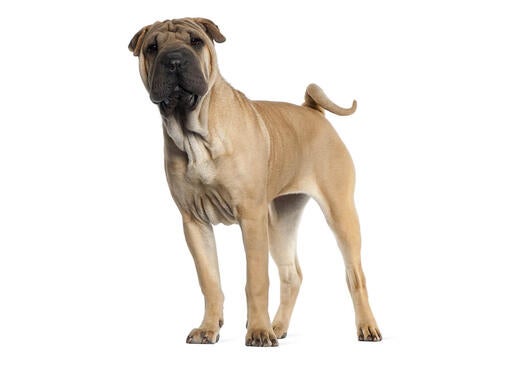
Health and common issues
The most common health problems affecting the Shar Pei are skin infections in the excessive skin folds, and various eye conditions. They also may suffer a particular condition which causes fever and joint swelling (familial Shar Pei fever).
Space requirements
The Shar Pei doesn’t need a large home but will enjoy a good-sized garden. As he is not always a particularly dog social, he will do well in a more isolated environment without close canine neighbours.
Training shar pei dogs
Shar Pei’s look on training as something very definitely beneath them and they are a challenge to train. At the very least they should be socialised with other dogs when they are puppies and trainer to walk on a lead and harness.
Best family dog breeds
Shar Pei’s do not make for good family dogs as they are not a lover of games or disruption, and they prefer a quiet household. While many dogs are traditionally thought of as being good with children, all dogs and children need to be taught to get on with and respect each other, and be safe together. Even so, dogs and young children should never be left alone together and adults should supervise all interactions between them.
Did you know?
- The Shar Pei’s wrinkles originated from his dog fighting days to prevent opponents being able to easily get hold of him and cause injury, while his prickly coat would feel unpleasant in their mouth causing them to quickly let go.
- If you read his original breed standard, you can discover why this dog looks as unique as he does. It says the Shar Pei should have a head shaped like a melon, a mouth like a mother frog, clam-shaped ears, a face like a grandmother, a neck like a water buffalo, a body like a fish, a back like a shrimp, all coupled with horses’ buttocks on dragon’s legs with feet like garlic!