Sorry, you need to enable JavaScript to visit this website.
Skip to main content
Why Do Dogs Lick Things
Why Do Dogs Lick Things?
6 mins read
Is your dog always rewarding you with slobbery kisses for no apparent reason? Find out why dogs like to lick things. Does your dog offer slobbery wet kisses left and right? Whether you are delighted, annoyed or slightly worried, you surely have the same burning question on your mind: why do dogs lick everything in sight? Why do dogs lick? There are lots of reasons why a dog licks you – it could be to show you affection or get your attention. It can also be a sign of stress and anxiety. Dog licking might seem simple but it is such a complex behaviour with so many different meanings. And if you’re worried that your dog is licking you (or themselves) too much, it’s worth consulting a vet to see if there is an underlying condition.
Why do dogs have whiskers
Why do dogs have whiskers?
4 mins read
Some think that dogs whiskers have no purpose and they have them snipped off at the groomers, but whiskers are actually essential in helping your dog navigate the world! Keep reading to find out more. Many people don’t realise that the coarse, long whiskers on a dog’s face actually serve an important purpose. In fact, some dog owners try and snip off dog whiskers because they think they look untidy. Also known as vibrissae, these dog whiskers have several uses and can help your dog navigate the world around them. They help your dog in many aspects of their life and even can guide them in the dark and help them figure out the size of different objects! Keep reading to find out why dogs have whiskers and why you should never have them snipped off, no matter how untidy your pooch appears. What are dog whiskers? Whiskers or vibrissae are long, coarse hairs that usually occur around a dog’s muzzle, jaw and above their eyes. They’re deeply embedded into the skin, and the follicles at the base of these whiskers are packed full of nerves that send sensory messages to the dog’s brain.
Why Do Dogs Chase Their Tails
Why Do Dogs Chase Their Tails?
4 mins read
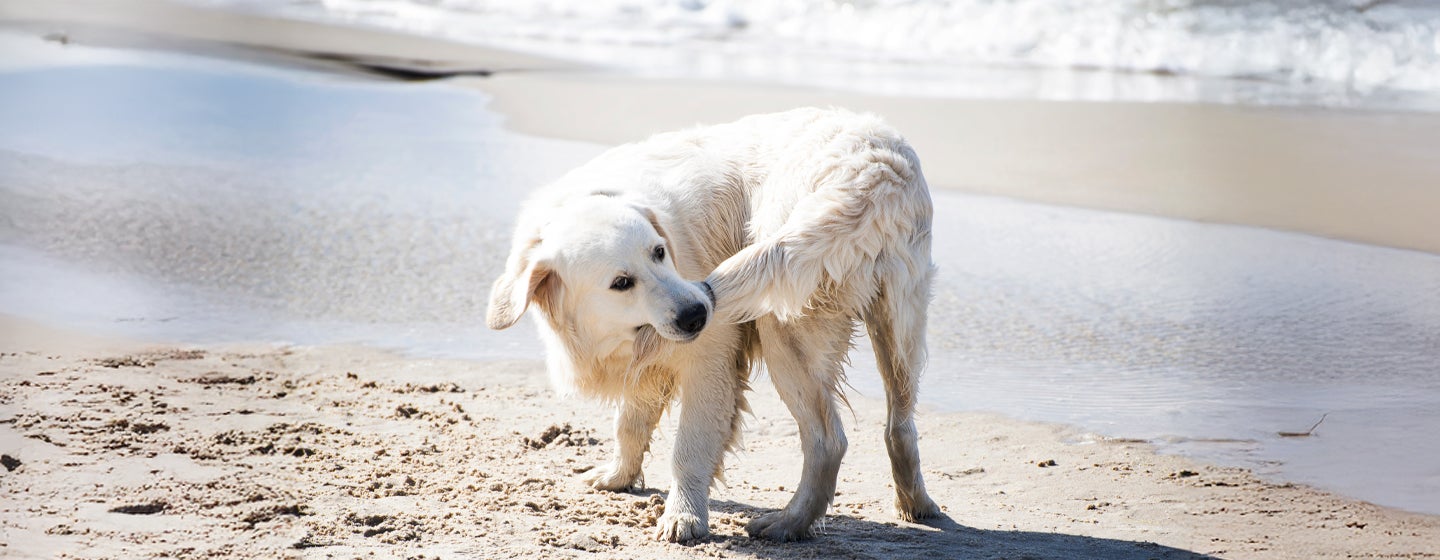
The image of a dog chasing their tail is one that’s been depicted time and time again, but have you ever stopped to wonder why they do it? Find out why do dogs chase their tails with our guide. If you’re a dog owner, you’ve probably witnessed your pup chasing their tail on occasion. Sometimes it may be just the odd, quick chase and other times your dog may resemble a tornado, whirling around and around in hot pursuit of their tail. When it’s only occasional and doesn’t seem to be doing your dog any harm, it’s usually harmless behaviour. However, if the tail chasing appears to be obsessive then there could be a health issue. For those that are wondering why do dogs chase their tails, we’ve put together this guide to tell you the most common reasons and when you should seek help from your vet. Why do dogs chase their tails? There are numerous reasons why your dog may chase their tail, from boredom to something more serious like an injury. It’s always best to consult a vet first to rule out anything health wise, but six of the most common reasons why they exhibit this behaviour are as follows: 1. Boredom Sometimes dogs chase their tail simply because of boredom. This may be because they’re left alone most of the day or aren’t getting enough mental or physical stimulation. Tail chasing offers a way to entertain themselves – at least for a little while – and also allows them to expel some of that built up energy. Luckily, if the chasing is due to boredom, it’s easy to fix. Increase their daily activity by adding more regular walks to their routine and bring in some physical and mental games. Every dog is powerless to resist a game of fetch and brain puzzles are an excellent way to engage their mind!
Why Do Cats Hiss?
4 mins read
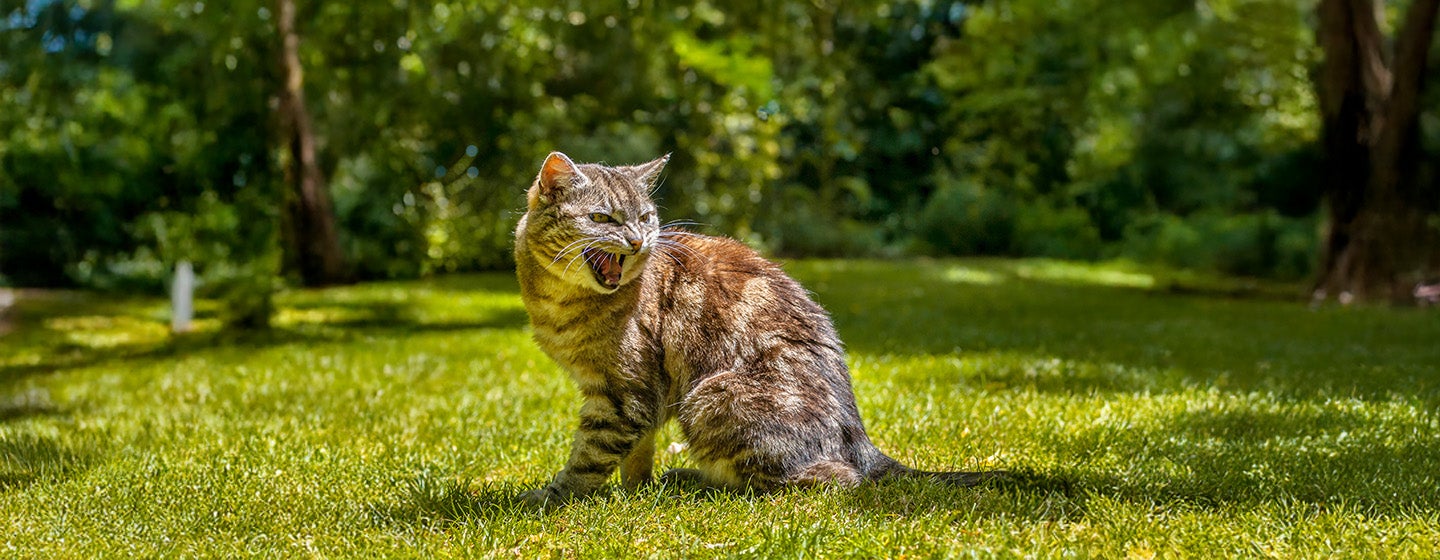
Cat hissing is a common behaviour which sort of resembles the sound a snake makes. We’ve come to associate this with them being extremely annoyed, but did you know there are numerous reasons why cats hiss? We’ve all seen our cats hiss, whether it’s at an intruder in the garden or when we’ve tried to pick them up when they’re not in the mood. As humans, we’ve learned to identify this as a sign that our cats are truly ticked off and not in the mood to be messed with, but there are other reasons why your kitty may be hissing. If you have a cat who keeps making these snake-like noises, you may be wondering why do cats hiss and what can you do about it? We’ve put together this guide to help you discover all the secrets behind cat hissing. How do cats hiss? When a cat feels threatened, they’ll release a burst of air through their mouth, and it’s this burst of air that makes a hissing sound. This sound will usually be paired with other cat body language signs such as bared teeth, flattened ears, an arched back and their fur will also stand on end (also known as piloerection). Why do cats hiss? When considering why cats hiss, it’s important to understand that hissing is a completely normal behaviour which helps your cat express themselves. Where humans can use speech to communicate, cats must rely on their body language to tell both us and other animals how they’re feeling. A few of the most common reasons behind cat hissing are as follows: 1. Warning shots First and foremost, cat hissing is usually a warning to another person or animal. It’s their way of telling them to back off or they’ll be forced to attack – cats characteristically want to avoid confrontation at all costs, so think of this as a warning shot. You may see them do this when there’s another cat on your cat’s turf, if a mother cat has kittens to protect or if the vet’s trying to handle them. According to Pets MD, this type of cat hissing is most common with un-neutered cats when they’re searching for a potential mate.
Why Do Cats Eat Grass?
3 mins read
If you’re a cat owner, you may have noticed that they can be quite partial to a munch of grass sometimes. This may seem unusual as cats are obligate carnivores, but grass can actually have numerous benefits for them. Find out why do cats eat grass with Purina. All cat owners know that their kitty enjoys the odd nibble of grass – which is too often followed by their cat vomiting up their breakfast. Because of this reaction, it’s common for pet parents to think that grass is actually toxic to their felines and many will reprimand them for munching on the green stuff. It may surprise you to learn that when cats eat grass it can actually have numerous health benefits for them, including everything from relieving constipation and acting as natural stress relief. Find out all the reasons why cats eat grass with Purina. Why does my cat eat grass? The compulsion for cats eating grass is certainly a strange one, especially since they’re obligate carnivores and don’t require vegetation to survive. As it stands, researchers haven’t agreed on one definitive reason why your cat enjoys a munch of your lawn, but there are many theories why they may do this. The top three ones are as follows:
What to Do If Your Dog’s Stung by a Bee or a Wasp
4 mins read
Bees and wasps are among the things that our dogs love to chase most. During the warmer months we often find them in hot pursuit of these fuzzy insects, but sometimes if they catch them, they can be met with a nasty sting! Find out what to do if your dog’s been stung by a wasp or a bee with our guide. Dogs are fascinated by bees and wasps. Their lazy buzzing is irresistible to dogs who enjoy chasing games. However, these little insects pack a surprisingly powerful sting when caught. In most cases if a dog is stung by a bee or wasp, they will experience mild local irritation which should subside within a few hours. However, it can be more serious if dogs receive multiple stings, or if they occur inside the mouth, nose or other sensitive tissues. At Purina, we’ve put together this useful guide to tell you what to do if your dog’s stung by a wasp or bee, the possible symptoms and when to seek help from your vet.
What to Do If You Found a Stray Dog?
4 mins read
What happens when you find a stray dog, and how can you help? Find out what to do when you find a dog without its owner. Even if you have an almost instant connection and want to keep them with you, there are basic steps everyone must follow when they find a stray dog. In this article, we will outline what to do when you find a dog without an owner. What should you do if you have found a dog on its own? 1. Approach them carefully A dog that is lost is likely to be very frightened and overwhelmed by their surroundings. If the dog is a stray, they will be wary of human beings and may be scared of your intentions. Approach the dog carefully. Make sure you do not frighten them further and that your body language puts them at ease. Talk to them soothingly to make them feel comfortable. You do not want them bolting, especially when there is traffic around. If the dog is behaving aggressively, do not approach, but find assistance. 2. Check if they are really a stray dog Check to see if they have a collar and if that collar tells you who the owner is. Sometimes, the collar may be lying around nearby. Do a quick search of the area to see if you can find it. You should also check the area to make sure their owner isn’t close by, looking for them! If you can find the owner’s contact details on their collar, ring immediately and tell them that their dog is safe. 3. Check for injuries Some dogs may be wounded. In such a cases, you may need to take them straight to the vet. 4. Contact the local council Immediately contact the local authorities and arrange a time for them to collect the dog or for you to drop the dog off at your local animal shelter. If it is safe and easy to do so, you can take the dog to your home first, but you must then call the authorities immediately. 5. The local authority will then keep the dog in the local animal shelter Again, this is a necessary step. While the stray dog you have found may not be wearing an identification collar, they should be fitted with a microchip that has their owner’s details. The local shelterwill be able to use this information to try and find the owner.
What to Do If You Find a Stray Cat?
4 mins read
What do you do when you find a stray cat? When a cat comes to your window, meowing for food and water, what steps should you take? Identify the cat (if you can) Cats often wander away from their families and sometimes cannot find their way back. Sometimes, they are simply out for a stroll and plan to return to their family in some time—but that some time could be days. Meanwhile, there is a family on the other end of this situation searching for their cat with no idea what may have happened to them. Do not assume, then, that the cat you have found is a stray. If they look healthy and well groomed, it is likely they belong to some family. Here are a few steps you can take to try and identify the cat. 1. If the stray cat is friendly, approach them and check to see if they are wearing a collar. If they are, this collar should have the contact details of their family on it. 2. If they are not wearing a collar, try and ask around to see if anyone in the neighbourhood has lost a cat. Word travels quickly. If the cat belongs to a home in the local area, news may travel back to the family. 3. If there are no easy and visible signs of identification or if no family comes forward to claim them, then you will need to take the stray cat to a local veterinary clinic or to another organisation, such as the nearest animal shelter. The cat could have a microchip. Your nearest local veterinary clinic or organisation will be able to scan the microchip to learn details of the cat’s family and reunite them with their owners. Finding the owners If there are no visible signs of identification, this does not mean that the cat does not belong to somebody. Cats are free spirits and like to wander. Your next step is to do everything you can to find your stray cat’s owner and return them to the family. Look at bulletin boards for lost cats and see if any of the descriptions match the cat you have found. Check local newspapers and listings to see if anyone has posted a similar cat missing. Check lostpet.co.nz, a nationwide database for lost and found animals. There are other NZ missing pet websites and Facebook groups too, as well as community groups specific to your area where you can create a listingfor the found pet. Be sure to regularly check for lost pet websites and Facebook groups, as the person who owns the cat may not see your listing. You can also be proactive. Print posters of the cat you have found and place it around your neighbourhood. Spread the word. Social media tends to be very effective for this, Twitter especially. Followers can retweet the picture of the stray cat.

What is Cognitive Dysfunction in Dogs?
2 mins read
Sometimes older dogs might undergo behavioural changes that seem unusual or a little more noticeable than just ‘slowing down’. Until recently, experts had attributed these things to the aging process, about which little can be done. More recently, however, unusual changes in older dogs have been attributed to a disorder called Cognitive Dysfunction Syndrome (CDS). Symptoms of cognitive dysfunction in dogs Examples of behavioural changes include a ‘confused’ dog that appears disorientated or lost in familiar surroundings, dogs wandering around aimlessly, and perhaps appearing to 'forget' to back out of corners.
What Human Foods Can Cats Eat?
5 mins read
A lot of us will slip their cat a tasty morsel of what we’re eating, but have you ever stopped to think “what human foods can cats eat?” Find out what’s safe for your feline to chow down on with this guide. A lot of people think that begging at the dinner table is behaviour that only dogs exhibit, but it’s actually very common for your feline to put on the kitty cat eyes too! If you’re tucking into a tasty tuna sandwich or enjoying bowl of ice cream, it’s highly likely your cat will be expecting you to slip a tasty morsel their way too. But it’s important to remember that just because a food is OK for us to eat, doesn’t automatically make it OK for them too. We’ve put together this guide to tell you what human food cats can eat so you know what foods you can share, and what you shouldn’t! What can cats eat? Generally, your cat should get everything they need from a 100% complete and balanced cat food. There’s no need to add extra ingredients to your pets’ diet, but there are certain human foods you can give them as an occasional treat. Here are a few human foods your cat can eat: Meats Cooked, lean meats such as beef, chicken, turkey, liver and lamb are all ok for you cat to eat. However, it’s important that you take great care when serving to make sure the meat’s cooked through – never give cats raw meat – and remove all skin and bones before feeding your cat. Fish Cats are widely known for their love of fish and most types are actually fine for your cat to eat! They contain omega-3 fatty acids which is good for their overall health and may also be beneficial for cats with arthritis and kidney disease. As with meats, make sure the fish is properly cooked and all the bones are removed, and never give your cat raw fish. Whole grains Whole grains such as oats, corn, brown rice and even couscous all contain lots of protein and are all human foods your cat can eat.

Pagination

  • First page
  • Previous page
  • …
  • Page 24
  • Page 25
  • Page 26
  • Page 27
  • Page 28
  • Page 29
  • Page 30
  • Page 31
  • Page 32
  • …
  • Next page
  • Last page
Purina Pet Club logo

Join Purina Pet Club for expert tips, helpful advice, exclusive offers and rewards.

Join the Club
Nourishing pets Purina pets grid card
Purina Pet Club logo

Join Purina Pet Club for expert tips, helpful advice, exclusive offers and rewards.

Join the Club
Nourishing pets Purina pets grid card
  • Cat
    • Care & Advice
    • Find a Pet
    • Food
    • Our Brands
  • Dog
    • Care & Advice
    • Find a Pet
    • Food
    • Our Brands
  • About Us
    • Our Mission
    • Our History
    • Our Purina Promise
    • Purina In The Community
  • Other
    • Join Purina Pet Club
    • Breed Selector
    • Contact Us
  • Cat
    • Care & Advice
    • Find a Pet
    • Food
    • Our Brands
  • Dog
    • Care & Advice
    • Find a Pet
    • Food
    • Our Brands
  • About Us
    • Our Mission
    • Our History
    • Our Purina Promise
    • Purina In The Community
  • Other
    • Join Purina Pet Club
    • Breed Selector
    • Contact Us
  • Cat
    • Care & Advice
    • Find a Pet
    • Food
    • Our Brands
  • Dog
    • Care & Advice
    • Find a Pet
    • Food
    • Our Brands
  • About Us
    • Our Mission
    • Our History
    • Our Purina Promise
    • Purina In The Community
  • Other
    • Join Purina Pet Club
    • Breed Selector
    • Contact Us
  • Cat
    • Care & Advice
    • Find a Pet
    • Food
    • Our Brands
  • Dog
    • Care & Advice
    • Find a Pet
    • Food
    • Our Brands
  • About Us
    • Our Mission
    • Our History
    • Our Purina Promise
    • Purina In The Community
  • Other
    • Join Purina Pet Club
    • Breed Selector
    • Contact Us
© 2026 Purina. All Rights Reserved.

©Reg. Trademark of Nestlé S.A.

Terms & Conditions
Privacy Policy
Cookies
© 2026 Purina. All Rights Reserved.

©Reg. Trademark of Nestlé S.A.

Terms & Conditions
Privacy Policy
Cookies
© 2026 Purina. All Rights Reserved.