Explore our complete and balanced food and treats, crafted to meet your pet's nutritional needs and enhance your special moments together.
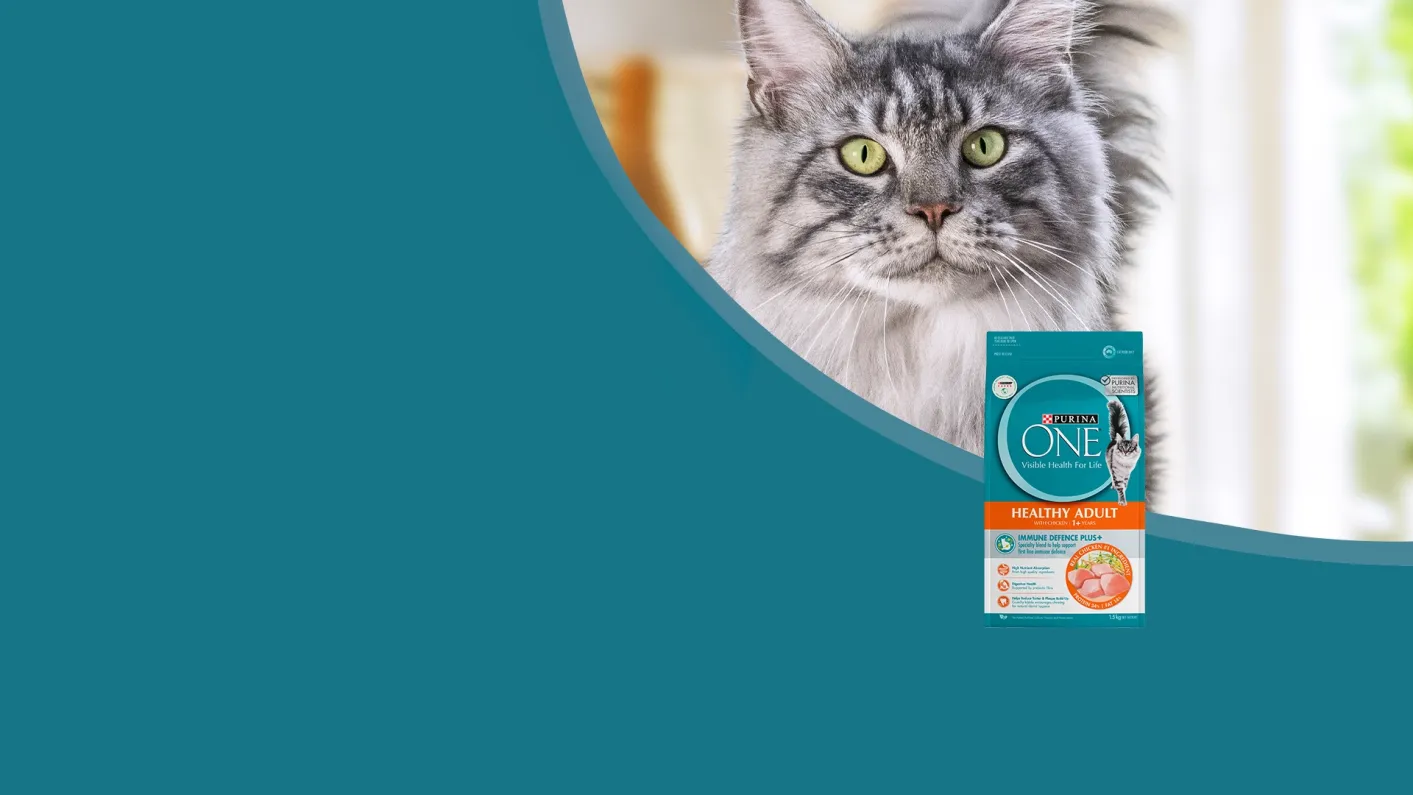
Great taste and proven nutrition that supports your cat’s visible health for life.
Advanced nutrition to keep your dog healthy for life. You'll see visible differences, inside and out.
Crafted gourmet recipes, because love is in the details.
Explore the irresistible taste of OSCAR, made for mischievous cats!
Feed Your Cat's Playfulness and Curiosity
TUX keeps ‘em full of life!
We understand the special relationship you share with your cat. That’s why our dry food is crafted with quality ingredients and essential nutrients to support cats at every stage of life. Made for everyday feeding, with a taste they’ll come running for.
If you’re in the market for a dog treat that looks, smells and tastes like bacon, you’ve come to the right place.
Fuel your dog’s instinct for adventure with Purina AdVENTuROS™. Inspired by nature, our long-lasting Wild Chew is wrapped in a tender layer rich in venison. It delivers bold flavour and lasting satisfaction for dogs who love to explore.
A full life means making the most of every moment, together. That’s why every Beneful recipe combines delicious flavours with balanced nutrition, creating meals that get tails wagging and taste buds dancing.
Take the challenge. See the difference.
A healthier, brighter, more vibrant version of your cat could be only 3 weeks away.
With 70 years experience in making quality food for kiwi dogs, the TUX team understands the unique requirements of dogs and know just what they need to stay happy, healthy and full of life.
Have a question about your pet’s health, nutrition or behaviour? Explore our articles and tips to help them live a healthier, happier life.
Your Cat's Age in Human Years
3 mins read
According to popular legend, one human year is the equivalent of seven ‘cat years’, but in reality, a one-year-old cat is much more mature than a seven-year-old child.
How old is my cat in human years?
Although there’s no reliable scientific way to calculate the relationship between human and cat years, it’s generally agreed that the first two years of a cat’s life are roughly equal to the first 25 of a human’s. After this, each additional year is around four ‘cat years’. This means if your cat is six years old, their equivalent cat age in human years will be around 41.
Find out how old your feline friend is using ourcat age calculator
Don’t worry, we’ve done all the math for you! Check our calculator at the bottom of the page and find out your cat’s age in human years at a glance.
What is the average life expectancy of my cat?
The true answer is that it depends, but indoor cats usually live longer than outdoor cats. On average, indoor cats live 16 to 18 years and some even reach the venerable age of 20.
Life expectancy in cats also varies depending on the breed, as some cat breeds will naturally live longer than others. For example, Siamese and Manx breeds are said to live the longest, so could reach a ripe age in human years!
Did you know that according to some sources, the world’s oldest cat lived to be 34? That’s 153 in cat years! Read more fascinating cat facts here.
Cats’ life expectancies have increased dramatically in the last few decades. Although it’s never enough, we’re spending more and more time together with our feline friends and that can only be a great thing.
How can I tell my cat’s age?
To find out how old your cat is, it’s best to take them to a vet. But you can still look for tell-tale signs of a cat’s age and health.
Teeth
Teeth can’t pinpoint the exact date for your feline friend’s birthday party, but they are still a great indicator of a cat’s age. The milestones are:
• A kitten’s first teeth appear between two to four weeks.
• Their permanent white teeth come in at around four months.
• Yellow stains (aka tartar) on a few teeth can mean your cat might be between one or two years old.
• If the stains appear on all teeth, the cat is likely at least three to five years old.
• Missing teeth are usually a sign that your cat is a respectable senior, between 10 to 15 years of age.
• But keep in mind that some cats can just have worse teeth than others regardless of their age.
From digestion to immunity, your cat’s gut health plays a major role in their overall health and happiness. Below are 5 simple and effective tips to help you care for the health of your cat’s intestine.
1. A balanced diet
An appropriate well-balanced diet for your cat’s metabolism is a great way to improve your cats’ gut health.
Therefore, choosing a diet adapted to your cat’s needs is a key factor: choosing a cat food specially formulated to help support your cat’s natural defences can help. Consumption of heat-treated lactobacilli has been proven to help support natural antibody production in your cat’s intestinal tract, while Omega-6 acids, and other selected nutrients, help support a healthy skin and a radiant coat.
On the contrary an unbalanced diet can be harmful for your cat’s gut health. Avoid all food that could be toxic (such as garlic, chocolate or avocado), food that could cause wind (e.g. cabbage beans) or food that could lead to weight gain (human food tidbits).
2. Grooming
Our cats love being pampered!! Make the most of it and groom them regularly: not only will you love hearing them purr, but by grooming them you will also help prevent them from ingesting large quantities of hair, which can cause constipation and affect your cats gut health.
3. On your marks…Ready? Play!
Exercising holds many benefits: not only does it stimulate your cats intestine, which is useful for regular bowel movements, but it also helps you to keep your cat‘s weight and stress levels under control.
20 minutes of exercise daily, split into two different sessions, will boost your pet’s energy level and strengthen your relationship.
4. Take it easy
She who goes slowly, goes healthily: cats are particularly sensitive to diet changes and modifications. Should you change your pet’s food it is recommended to proceed step by step.
Cats don’t usually need baths, but there are some exceptional circumstances. If they’re rolled in something that they can’t wash off themselves, or they have long hair which has become matted, a bath might be a good idea.
Most cats really dislike baths and they can find the experience very stressful. If you’re able to, just clean an isolated area, rather than getting their entire body wet.
That said, there are rare occasions when bathing your cat is unavoidable, in which case there are ways to make the experience more comfortable for both of you. However, if your cat needs a bath because they’ve come into contact with toxic substances, take them to the vet first.
Before you bathe your cat
Get everything you need in one place, so that once you’ve started bathing your cat, everything is within easy reach. You’ll need:
• A large plastic bucket, sink or bath (lined with a non-slip floor mat) to use as a cat bath.
• Specialist cat or kitten shampoo. Find a mild all-rounder with no harsh chemicals or perfumes. Never use human shampoo, as it’s unsuitable for cat hair and skin due to the difference in p
H levels.
• A cat conditioner if required. Again, don’t use conditioner for human hair.
• A towel or two.
• A brush to help remove matts and knots.
Bathing your cat
Most dogs love nothing more thanmeal time! As soon as you open theirfavouritefood they’ll run in with their tails wagging, whether they’re eating a dry kibble or a wet food.
Both wet and dry dog foods are nutritionally complete andbalanced, andwill provide your canine friend with everything they need for their health and happiness. But you might have wondered what the benefits are, and which your dog will prefer.
• What is the difference between wet and dry dog food?
• Which one is 'better'?
• How can you choose between them?
Read on to find out more, and help you decide whether your dog will prefer wet or dry dog food.
Wetdogfood contains more water
Wetdogfood, of course, contains more water than dry kibble. This means that each meal will appear slightly larger, meaning there’s ‘more’ for your dog to eat, and each meal will last longer too. This water is also a small source of hydration, which is helpful if your dog doesn’t drink as much as they should. Even so, if you serve wet food ensure they always have a bowl of clean fresh water on hand! Many types of wet food also come in portion sizes, such as individual cans or pouches, which makes serving your dog very easy.
Your dog’s digestive system can normally look after itself, as long as it is getting the right food and nutrition. But even with your care it can sometimes encounter unexpected problems.
Your dog loves the nutritious food and occasional treats you give them – a great meal time is all part of their fun and active lifestyle! When their food is such a source of excitement for them and a pleasure for you, it can be easy to forget about keeping an eye on their digestive health.
But there’s no need to worry – many of these problems are easily solved through a change in diet.
Keep reading to find out about keeping your dog’s digestive health in order, and common problems to look out for.
General dog digestive health
Your dog’s digestive system is fairly hardy (just think what they’d eat if they were allowed!), but it’s a good idea to monitor their appetite anyway. As well as what you feed them, remember that your family and friends naturally love giving your dog a bit of extra fuss, attention and treats too!
Here are some general tips for feeding your dog:
• Your dog will enjoy a good quality, complete dog food most, as not only will it have the right balance of nutrients, a good level of palatability will ensure they really enjoy it.
• Tempting as it is, adding human food to a nutritionally complete and balanced commercial dog food can cause digestive problems in dogs.
• Your dog probably knows all kinds of tricks to persuade you to give them table scraps! Firmly but kindly ignore ‘begging behaviour’ for additional food.
• When your dog is focused on getting table scraps, give lots of hugs, praise and playtime instead, which you’re both able to enjoy!
• It’s best to feed your dog at regular scheduled times. Use the correct amount of food to maintain your dog’s optimum body condition so they stay in tip-top shape.
To find out more, check out our guide to feeding adult dogs.
General causes of digestive disorders in dogs
In an ideal world our dogs don’t have any problems with their digestive systems, but of course you can’t always prevent illness.
Classic games like ‘fetch’ are lots of fun for you and your dog, but exercise isn’t just about running around. Mental exercise is important too, as it can help fight boredom and teach your dog great new skills.
Dog brain games can help keep your pet on their toes when it’s too rainy to play outside. They’re also great for dogs of any age – brain games for puppies challenge their developing brains and keep them learning new skills. They can also help keep adult dogs stimulated and may even help senior dogs stay alert and active.
We’ve put together five of our favourite brain games for dogs.
1. Treasure hunt
This is a great brain game to test your dog’s thinking skills! Hide pieces of your dog’s favourite treat around the house (or if it’s nice outside, the garden) and let them hunt for a tasty reward. Your dog will have to use their nose to scent out the prize.
Every time you play this dog brain game, hide the treats in increasingly difficult places to keep things interesting. If your dog loves to follow scents (for example, if you have a scent hound) try leaving a ‘trail’ around the house or garden for them to follow. Just take a delicious-smelling treat, touch it on surfaces around the house in a continuous trail, and hide it at the end.
2. Brain training toys
A really simple brain game for dogs involves hiding treats inside a special toy. There are many toys you can buy for this purpose – just put some of your dog’s favourite treat inside, and watch them try to release it.
This may involve rolling their toy a certain way, squeezing it, or using sheer determination. Whichever toy you choose, it will help spread their treats or food out over a longer period of time, as well as keeping them occupied.
PURINA has pioneered nutritional innovation for over 130 years, driven by the belief that pets and people are better together. We care about quality because we love pets as much as you do.