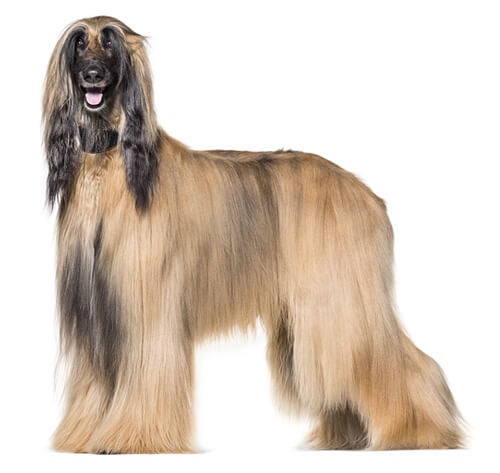
Afghan Hound

A dignified, aloof breed often considered an aristocrat, the Afghan Hound has a happy temperament and makes an excellent family companion. Little is known about the Afghan Hound’s history before the 19th century when he was discovered in Afghanistan. A large breed, the Afghan Hound requires regular exercise, and his long, silky coat needs regular grooming.

DID YOU KNOW? In April 2005 in Korea, an Afghan Hound called “Snuppy” became the world’s first successful dog clone.

ALSO KNOWN AS: Kuchi Hound, T?z?, Balkh Hound Baluchi Hound, Barutzy Hound, Shalgar Hound, Kabul Hound, Galanday Hound, Or sometimes incorrectly African Hound.


The need-to-know


  • Dog suitable for owners with some experience
  • Extra training required
  • Enjoys active walks
  • Large dog
  • Minimum drool
  • Requires grooming daily
  • Non hypoallergenic breed
  • Chatty and vocal dog
  • Not a guard dog
  • May require training to live with other pets
  • May require training to live with kids


Living Considerations
 Good with older children, suitable for apartment living, not hypoallergenic
Size
 Medium
Height
 63.5 to 69 centimetres at the shoulders
Weight
 22 to 27 kilograms
Coat
 Long
Energy
 High
Colour
 Any colour
Activities
 Agility, Conformation, Hunting, Lure Coursing, Racing, Rally Obedience
Indoor/Outdoor
 Both
Personality

Often aloof with strangers, early socialisation is a must for this regal dog, as is early puppy training. With their family and those they know, there’s no hint of standoffishness – they are wonderfully loyal and loving - and a bit of a clown.


History and Origins

Country of Origin: Afghanistan


Possibly the most glamourous of the sighthounds, the Afghan is probably a descendant of the Saluki brought to Afghanistan from Persia. As the climate in Afghanistan can be punishing - especially in the mountains, the dogs developed a longer coat as protection as they worked pursuing a variety of prey of all sizes including hare, gazelles, wolves and even snow leopards.The dogs were highly prized by the Afghan nomads who would gather together every year for a festival to celebrate their dogs and would dress them with traditional necklaces and flowers.The earliest Afghans appeared in the UK in the 1920s but thanks to their glamorous appearance, they soon became extremely popular.


Nutrition and Feeding

Large breed dogs benefit from a different balance of nutrients including minerals and vitamins compared to smaller-breed dogs. Afghan Hounds are prone to bloating and stomach problems; smaller, more frequent meals can help minimise this risk.

Exercise

An adult Afghan Hound needs a moderate amount of exercise (1-2 hours) but does need the opportunity for free running.

Other Information

Health and common issues


The Afghan dog breed is generally healthy and robust, with few breed specific problems commonly occurring. The breed club monitor the health of the breed carefully and should be contacted for the most up-to-date information and details of any DNA or additional testing they recommend. Breed Clubs can be found on the Kennel Club website.


Space requirements


A large dog, the Afghan appreciates space - both indoor and outdoors. Most importantly however is having access to safe, secure areas to run that are far from roads or any other hazards.


Training afghan hounds


Like most sighthounds, Afghans rather look down on the whole idea of training but early socialisation is important - as is training them to walk on a lead. It is worth putting the effort into training a good recall - although it shouldn’t be relied upon if a squirrel is spotted! Once an Afghan is enjoying their thrill of the chase - or even just of running free - all thoughts of recall leave their minds. If they are to live with cats, puppies should come from a breeder who has raised them together - or else time and care must be taken. They may never be reliable with strange cats or other small animals.


Best family dog breeds


The Afghan Hound makes a good family dog - although prefers a quiet home with constant company and so they are better with older sensible children. While many dogs are traditionally thought of as being good with children, all dogs and children need to be taught to get on with and respect each other, and be safe together. Even so, dogs and young children should never be left alone together and adults should supervise all interactions between them.


Did you know?


  • Given their speed, Afghan Hounds have been tried out on traditional greyhound tracks - but without much success. Being smart and resourceful they see no point in running round the outside of the track when they can just cut across the middle and head the prey off without any effort.
  • The Afghan Hound is one of the oldest dog breeds and legend has it that this breed was one of the animals rescued on Noah’s Ark.
  • This is one of the fastest ever dog breeds and can reach speeds up to 40mph.
  • Afghan Hounds were one of Picasso’s favourite dog breeds.
  • They have scent glands in their cheeks which produces a musky odour which is said to be quite pleasant!
 

Turkish Angora

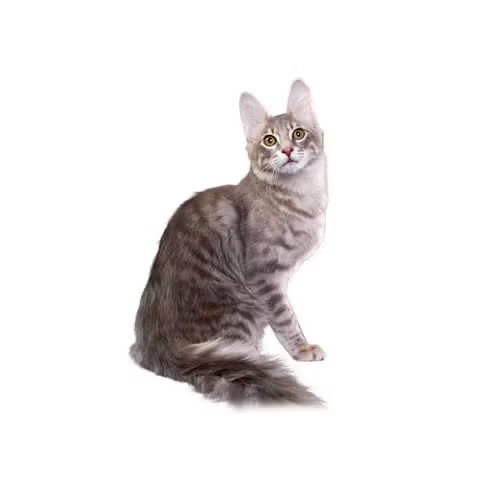
An elegant, beautiful breed, the Turkish Angora has a soft, silky coat on a slender, finely boned frame with a full, tapering tail. This active, playful feline is sometimes called the ballerina of the cat fancy due to her gracefulness. One of the most extroverted cat breeds, the Angora loves being the centre of attention and enjoys entertaining her human companions. This healthy breed usually lives a long life.

DID YOU KNOW? The Turkish Angora may have been the first longhair cat in Europe and is believed to have descended from longhair cats in Turkey, Russia and Persia. The breed is named for the former Turkish capital of Angora, today known as Ankara.


The need-to-know


  • Playful and curious cat
  • Sociable and dependent cat
  • Somehow talkative cat
  • Average build cat breed
  • Requires grooming once a week
  • Non hypoallergenic breed
  • Needs some out-door space
  • Great family cat


Living Considerations
 Good for family multi-pet households, not hypoallergenic
Size
Medium, with males weighing 3.5 to 5 kilograms and females weighing 3 to 4 kilograms
Coat
Semi-long, full, silky
Temperament
Affectionate, playful, loyal
Grooming
 Weekly
Shedding
Yes
Vocalisation
Moderate

Toyger

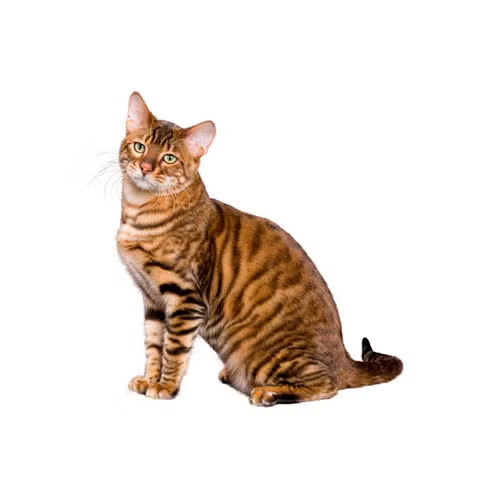
With her beautiful bold stripes and powerful body, the Toyger looks like a jungle tiger. This breed has a friendly, outgoing temperament and delights in being with people, even strangers, and gets along well with other pets. Highly intelligent, the Toyger is easy to train to go on leash walks and to play fetch. The Toyger is generally robust and healthy.

DID YOU KNOW? Bred to resemble wild tigers in a domestic package, the Toyger has a unique coat pattern for a domestic cat. Instead of the vertical stripes of the mackerel tabby or the rounded rosettes of some spotted tabbies, the Toyger has broken, or branched, bold vertical stripes in a random pattern.


The need-to-know


  • Highly active and inquisitive cat
  • Sociable and dependent cat
  • Somehow talkative cat
  • Average build cat breed
  • Requires grooming once a week
  • Non hypoallergenic breed
  • Needs some out-door space
  • Great family cat


Living Considerations
 Good for family multi-pet households, not hypoallergenic
Size
Medium, with males weighing 3.5 to 5 kilograms and females weighing 3 to 4 kilograms
Coat
Short, plush, soft
Temperament
Outgoing, intelligent, active
Grooming
 Monthly
Shedding
Yes
Vocalisation
Average

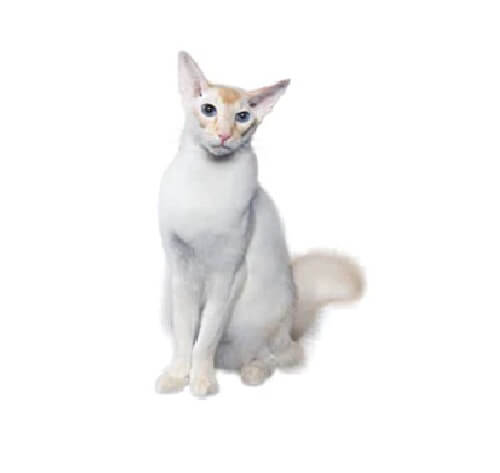
Himalayan

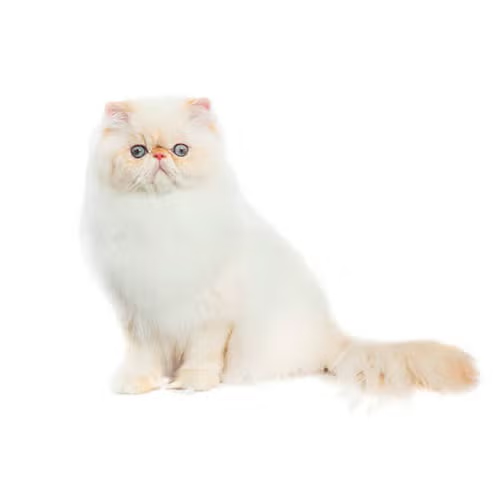
One of the most beloved cat breeds, the Himalayan craves affection and loves to be petted. The Himmy is a devoted, loyal companion that is good with children and other pets. This poised, sweet feline is calm and self-assured. She is also active and playful well into her senior years. A healthy, long-lived breed, the Himalayan’s body is various shades of white to fawn with point colours on her facial mask and extremities.

DID YOU KNOW? In 1950, an American cat breeder, Marguerita Goforth, began developing the Himalayan by crossing a Siamese and Persian. The Himalayan features the colour and pattern of a Siamese and the short, heavy-boned body and coat of the Persian, thus is referred to as a pointed pattern Persian.


The need-to-know


  • Highly active and inquisitive cat
  • Sociable and dependent cat
  • Somehow talkative cat
  • Average build cat breed
  • Requires grooming every day
  • Non hypoallergenic breed
  • Indoor cat
  • Great family cat
Living Considerations
 Good for family multi-pet households, not hypoallergenic
Size
Medium to large, with males weighing 4 to 6.5 kilograms and females weighing 3 to 5 kilograms
Coat
 Long
Temperament
Playful, active, social
Grooming
 Daily
Shedding
 Heavy
Vocalisation
 Moderate

Havana Brown

The Havana Brown is called the puppy of the cat fancy because this breed loves to follow her owners everywhere. Outgoing, playful and charming, Brownies are intelligent and easily trained to fetch. Unlike cats that use their sense of smell to investigate curiosities, this feline extends her paws, often appearing to be holding out a paw of friendship. The Havana Brown is social and doesn’t like being left alone too long.

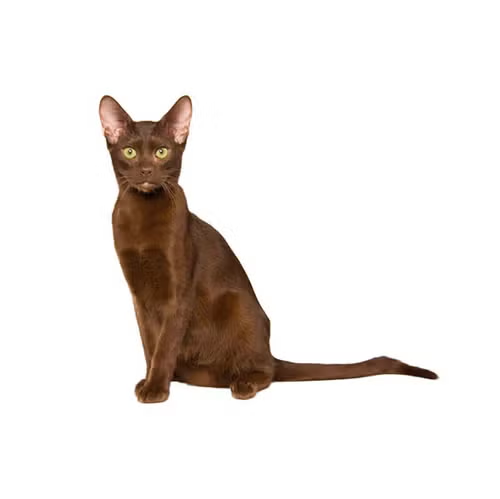
DID YOU KNOW? The Havana Brown was named for the similarity of her lovely burnished, mahogany-toned, glossy coat to the brown color of Havana cigars. The Havana Brown is exclusive to North America. The Chestnut Brown, the European version of the Havana Brown, is the equivalent of the chestnut Oriental Shorthair.


The need-to-know


  • Playful and curious cat
  • Sociable and dependent cat
  • Somehow talkative cat
  • Average build cat breed
  • Non hypoallergenic breed
  • Indoor cat
  • Great family cat
Living Considerations
 Good for family multi-pet households, not hypoallergenic
Size
Medium, with males weighing 3.5 to 5 kilograms and females weighing 3 to 4 kilograms
Coat
Short to medium, smooth, lustrous
Temperament
Playful, adaptable, social
Grooming
 Rarely/Never
Shedding
Yes
Vocalisation
Soft, intimate voice

Balinese-Javanese

A Siamese in every nature except for her long, silky ermine coat, the Balinese, also known as the Javanese, has a distinctive luxurious tail plume. This long, slender cat is lithe but muscular. An easygoing breed with a clownlike personality, the Balinese adores people. This regal, aristocratic, intelligent cat is talkative, though less vocal than the Siamese. A healthy breed, the Balinese can live up to 20 years.

DID YOU KNOW? The long, elegant body of the Balinese prompted the breed being named after the graceful dancers from the island of Bali.


The need-to-know


  • Highly active and inquisitive cat
  • Friendly but independent cat
  • Very talkative cat
  • Average build cat breed
  • Requires grooming once a week
  • Non hypoallergenic breed
  • Indoor cat
  • Great family cat


Living Considerations
 Not hypoallergenic
Size
Medium, with males weighing 5.5 to 7.5 kilograms and females weighing 3.5 to 5.5 kilograms
Coat
Medium
Temperament
 Active, affectionate, demands attention
Grooming
 Monthly
Shedding
Yes
Vocalisation
Talkative

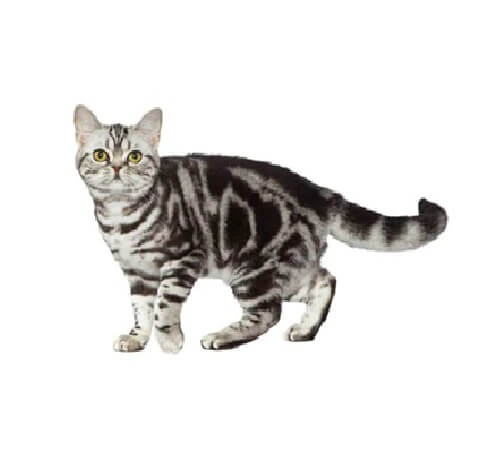
American Shorthair

Ancestors of the American Shorthair hunted rats on the ships of early European settlers. These cats flourished alongside the pioneers, eventually becoming the native North American shorthair cat. A true working breed, the American Shorthair is strongly built. This healthy, long-lived cat stands out for her beauty and quiet disposition and makes an ideal companion for families with children and those having cat friendly dogs.

DID YOU KNOW? The American Shorthair, originally known as the Domestic Shorthair, became one of the first five breeds recognized in the U.S. when it was registered in 1906. The breed was renamed the American Shorthair in 1966 to better capture its “All-American” character.


The need-to-know


  • Calm cat
  • Friendly but independent cat
  • Quiet cat
  • Average build cat breed
  • Requires grooming once a week
  • Non hypoallergenic breed
  • Indoor cat
  • Great family cat
Living Considerations
 Good for multi-pet households, not hypoallergenic
Size
Medium to large, with males weighing 5 to 7 kilograms and females weighing 3.5 to 5.5 kilograms
Coat
Short
Temperament
Calm
Grooming
 Monthly
Shedding
Yes
Vocalisation
Quiet

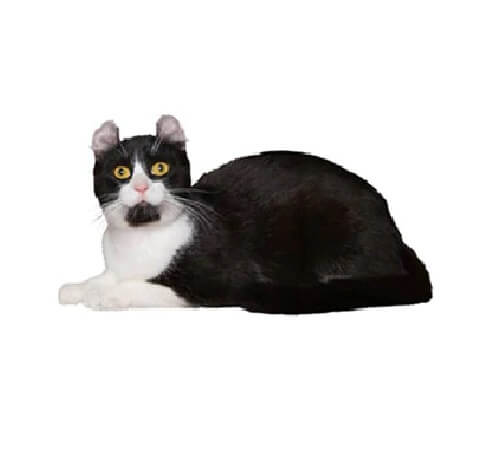
American Curl

The American Curl has distinctive curled ears that form a graceful arc, giving an alert, perky expression. This breed is known as the “Peter Pan” of cats due to retaining its kittenlike personality throughout life. The Curl has two coat varieties, shorthair and longhair. With her outstanding temperament, the Curl is a people-oriented breed that makes an affectionate soul mate and easily adjusts to other pets and children.

DID YOU KNOW? The American Curl has an autosomal dominant ear curling gene that is responsible for the breed’s famous curled ears. Kittens are born with straight ears that begin to curl backward after three to five days.


The need-to-know


  • Playful and curious cat
  • Friendly but independent cat
  • Quiet cat
  • Average build cat breed
  • Requires grooming once a week
  • Non hypoallergenic breed
  • Indoor cat
  • Great family cat
Living Considerations
 Good for multi-pet households, not hypoallergenic
Size
Small to medium, with males weighing 3 to 4.5 kilograms and females weighing 2 to 3.5 kilograms
Coat
Short (shorthair) and semi-long (longhair)Temperament
Grooming
Weekly
Shedding
Minimal
Vocalisation
Quiet

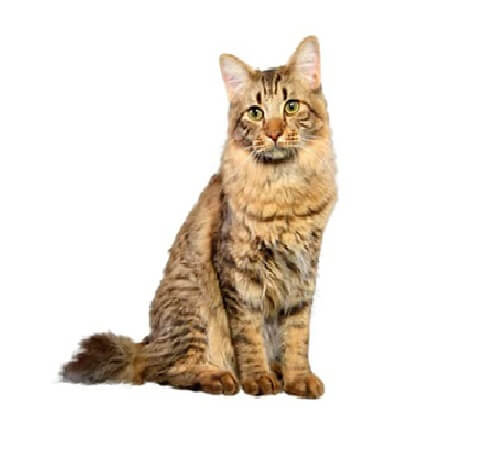
American Bobtail

Confident and friendly, the American Bobtail is a highly intelligent breed with a clownlike personality. Looking much like a bobtailed wildcat, this rare and athletic breed can be taught to walk on a leash. The American Bobtail has two coat varieties, shorthair and longhair, and does not reach adulthood until 2 or 3 years old. A devoted family companion, this cat interacts well with people of all ages and is ideal with children.

DID YOU KNOW?
The American Bobtail has a naturally short bob tail that can be seen clearly above the back when the cat is alert. No tail is exactly the same, but the average length is 2.5 to 10.5 centimetres.


The need-to-know


  • Playful and curious cat
  • Sociable and dependent cat
  • Somehow talkative cat
  • Average build cat breed
  • Requires grooming every day
  • Non hypoallergenic breed
  • Indoor cat
  • Great family cat
Living Considerations
 Not hypoallergenic
Size
Medium to large, with males weighing 4.5 to 7.5 kilograms and females weighing 3 to 5 kilograms
Coat
Medium (shorthair) and long (longhair)Temperament
Grooming
Yes
Shedding
Yes
Vocalisation
Average, considered mostly quiet but will trill, chirp and click when delighted

Turkish Van

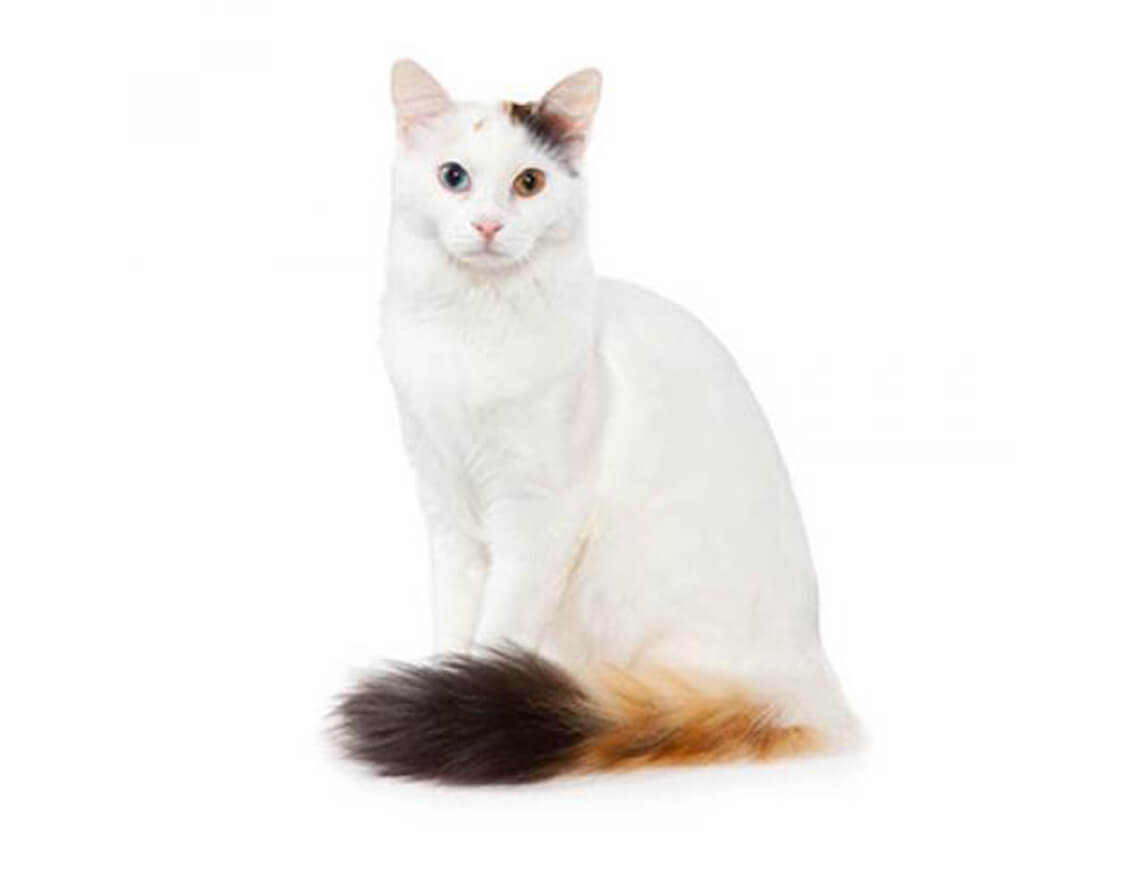
The beautiful Turkish Van is distinguished by her chalk-white body and coloured markings on the head and long, plumed tail. This curious feline has powerful hind legs that allow her to jump on otherwise hard-to-reach spaces. The sweet, loving breed likes to be involved in whatever is going on and enjoys curling up on a lap. A slow-maturing breed, the Turkish Van takes three to five years to reach maturity.

DID YOU KNOW? The Turkish Van is a rare, ancient breed that developed in central and Southeast Asia, in areas known today as Iran, Iraq, southwest Soviet Union and eastern Turkey.


The need-to-know


  • Playful and curious cat
  • Friendly but independent cat
  • Somehow talkative cat
  • Average build cat breed
  • Requires grooming every day
  • Outdoor cat
  • May require familiarisation before living with children
Living Considerations
 Good in multi-pet households, not hypoallergenic
Size
Medium to large, with males weighing 4 to 9 kilograms and females weighing 3 to 5.5 kilograms
Coat
Semi-long, fine, cashmere-like
Temperament
 Energetic, mischievous, intelligent
Grooming
 Weekly
Shedding
Yes
Vocalisation
 Loud
Personality

Turkish Van cats are extremely intelligent and friendly and they make excellent companions. They are lively cats and will enjoy playing games with humans or other cats and so they need stimluaton and a chance to play. Turkish Van cats have soft voices.


History and Origins

Country of Origin: Turkey


Other Names: : Turkish Swimming Cat


The most amazing characteristic of the Turkish Van cat is its affinity with water. It not only likes water but also seems to enjoy a swim. The breed originates from the area surrounding Lake Van in Turkey and has been domesticated there for hundreds of years. In the 1950s a pair of Turkish Van cats were brought back to Britain by a holidaying couple and they began to breed these distinctively marked cats in the UK.


Nutrition and Feeding

Every cat is unique and each has their own particular likes, dislikes, and needs when it comes to food. However, cats are carnivores and every cat must obtain 41 different and specific nutrients from their food. The proportion of these nutrients will vary depending on age, lifestyle and overall health, so it's not surprising that a growing, energetic kitten needs a different balance of nutrients in her diet than a less active senior cat. Other considerations to bear in mind are feeding the right quantity of food to maintain 'ideal body condition' in accordance with feeding guidelines and catering to individual preference regarding wet or dry food recipes.

Other Information

Health and common issues


At present there are no diseases specifically linked to this breed. As with all cats, the Turkish Van breed needs vaccinations, parasite control and annual veterinary health checks.


Best cat breeds for children


While this breed is not widely recognised as one of the best breeds for children, all cats are different and with the proper familiarisation may still be able to live with children.