Sorry, you need to enable JavaScript to visit this website.
Skip to main content
Puppy Energy Levels by Age
2 mins read
Puppy behaviour and their energy levels change with time. Here are the stages. From Birth-10 Weeks Puppies at this age are like “babies.” They have boundless energy and curiosity. They spend most of their day playing as well as learning the foundations to being a dog: chasing, running, pawing, biting and fighting. Their enthusiasm for life and its surroundings can be exhausting, but this is also the perfect time to start thinking about a puppy care and training plan. From 10 Weeks-16 Weeks Puppies at this age may still have a lot of playful energy. But they are also starting to test their boundaries. Like teenagers, they may seem to “forget” the rules or commands that they once followed. This is normal developmental behaviour for puppies in this juvenile phase. Some of this behaviour may be due to teething as puppies begin to lose their first set ofteetharound 3-4 months of age. From 4-6 Months You may notice that your puppy likes to play-fight with other dogs around this age. This is how puppies start to identify where they fit in with a group. This is normal behaviour. It’s also around this age when some puppies show fear. If your puppy does show fear, it’s best to ignore the behaviour and build his confidence through training. From 6-12 Months While your puppy may now look like a full-grown adult dog, he’s still a puppy. At this age you might see a burst of puppy energy and continued boundary testing. That’s why it’s important to make sure your puppy still gets plenty of structured play and exercise. Continuing with training and socialization with other dogs is also essential at this age. From 1-2 Years Congratulations! You’ve survived puppyhood! As your puppy nears age one (up to two years for a large breed), he’s beginning to look and act more mature. He will probably still be very playful, but by now he’s learned the ropes and is much better at following the rules.
Puppy Biting. How Do I Get Him to Stop?
2 mins read
Biting or nipping is normal behavior for your puppy. You have to establish boundaries early, though, or you’re in for bigger ouches later. Biting occurs often when your puppy wants to play with you. Puppies normally learn to play with and nip their siblings from a young age, and learn their boundaries from how their siblings and their mother react. When a puppy is taken away from his litter early (prior to 8 weeks old), he may not have completely mastered those boundaries, so it is your job to teach him. Puppy Biting: The Do’s and Don’ts DOignore your puppy and/or go limp when he begins biting you. You can also give a sharp “Yip!” or “Ouch” which will startle your puppy and stop the biting. Then praise him calmly when he stops. DOoffer your puppy a toy to biteinstead of you, and praise him when he switches to the toy. DOstop all interactions and walk away if your puppy continues to bite. DOwork to train your puppy to use his mouth gently. Wave your closed fist in front of his face and pull it away if he tries to nip. Try it again, and if he does not nip, give him a treat. Make sure the treat is in the opposite hand you are presenting. Try this with other objects, your open hand, your finger, and finally a toy and eventually give him the toy before he nips. Lengthen the time he has to wait patiently before giving him the treat and/or the toy to play with. You are teaching him he has to wait for permission in order to play/nip. (Click here to learn more about how to begin puppy training.) DOuse a command, such as “NO!” If your puppy is playing and seems to be getting nippy, stand up, take your hands away and say, “NO.” Give him a treat when he is sitting calmly as a reward for desired behavior. Using the “NO!” command will come in handy in many situations with your puppy, it simply means to stop doing what he is doing. DOsupervise your child when he plays with your puppy. DObe consistent in your praise and rewards, especially in the early stages. DON’Tyell at your puppy, tap your puppy in the nose, or hold his mouth shut when he bites. You are just confusing your puppy and teaching him not to trust you when you play. DON’Tantagonize your puppy to get him to bite for training or any other purpose. DON’Tlet your child’s face be near your puppy’s face while you are working on bite training. DON’Tgive up on your puppy and think that he’ll learn eventually on his own. For consistent results and a mutual understanding between you and your puppy, he needs to know his boundaries every time you play together.
How To Deal With Puppy Separation Anxiety
3 mins read
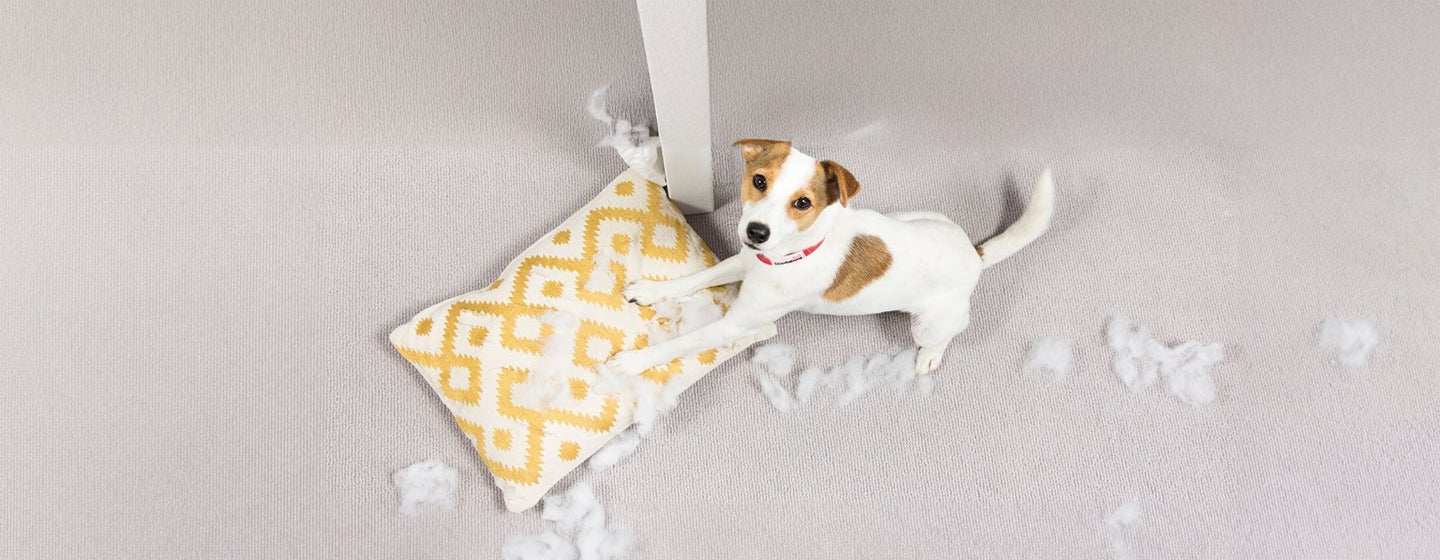
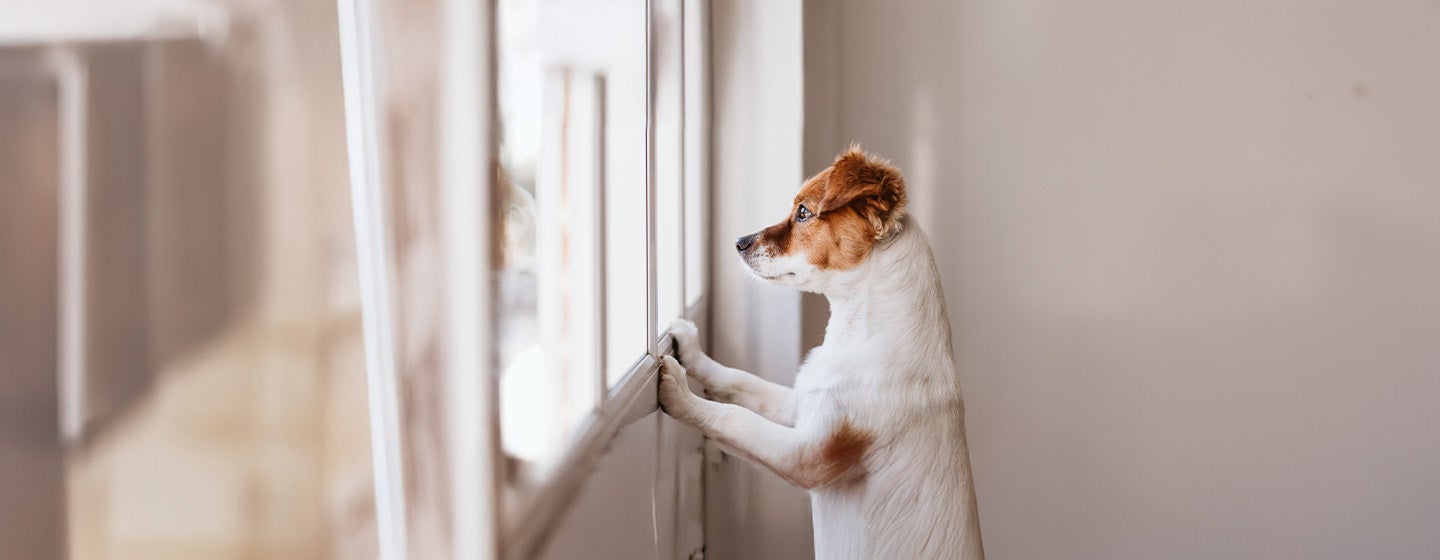
If your puppy scratches at the door, cries or barks excessively, goes to the bathroom in the house and/or chews things every time your family leaves the house, he may be suffering from separation anxiety. Why some puppies develop separation anxiety and some don’t is not fully understood. Whatever the cause, it’s important to realize these behaviors are not malicious and that they are likely panic or other coping behaviors. Punishing your puppy will not eliminate separation anxiety. Gradually adjusting your puppy to being alone is the best approach. Preventing Separation Anxiety It’s good for your puppy to be comfortable when home alone. You can help him learn this by taking a little time and following these simple steps. Start as soon as your puppy comes home, if possible. • Puppies like routine. Develop aschedulefor your puppy, and make sure your family sticks to it. • Practice Preventative Training. • Always give your puppy an opportunity to go potty prior to crating him. • Crate train your puppy. When done properly, the use of a crate is a great way to help your puppy remain calm—and out of trouble! See our guide on Crate Trainingyour puppy for more information. • Crate him for short periods while you are present. For example, when you are watching television, put your puppy in his crate and put the crate next to the sofa. Gradually increase the time crated. Reward quiet behavior with calm praise. • Start leaving your puppy alone in his crate. Start with just a few minutes at a time. Gradually increase the time spent alone. • Limit the attention he gets shortly before leaving, so it isn’t such a shock when your family does leave. • When you let your puppy out of his crate, remain calm and keep the greetings to a minimum. You don’t want to make him excited. • Most puppies don’t need to be crated throughout their lives, but don't rush freedom. Typically, puppies aren’t ready to be given unsupervised freedom in your home until they are approximately a year-and-a-half or older. • Try to make sure someone in your family is home as much as possible. Consider hiring a puppy-walker or neighbor to give your puppy a midday break while everyone is in work or school. Keeping your schedule similar on weekends can help make things easier for your puppy. A Do And A Don’t DOmake leaving and arriving uneventful. By making leaving a big production – lots of hugs and goodbyes or asking if he’ll miss you – you may increase your puppy’s anxiety level. You may want to consider giving him a treat or anappropriate toyso that he associates the crate with something positive. Leaving the television or a radio on may help too. DON’Tget overly excited when you return. Just let your puppy out of his crate promptly and take him outside as he may need to relieve himself. As he gets older and has better control of his bladder, wait until your puppy is calm and quiet, then casually go greet him and praise him for being calm and quiet. Signs of Serious Separation Anxiety Most puppies whine or cry a little when left alone. True separation anxiety is defined as destructive or disruptive behavior by a puppy, including tearing up the room, constant barking and whining, or inappropriate elimination when he is left by himself. Consult your veterinarian, a qualified puppy trainer or a behavior professional if you are unable to resolve these issues on your own.
How Long to Feed Puppy Food & When to Switch to Adult Dog Food
3 mins read
You should feed puppy food until your puppy reaches maturity. Once he has reached maturity, you can switch toadult dog food. Not all breeds reach maturity at the same age, however, so this can make it harder to know when to switch. How Long to Feed Puppy Food Puppies need a complete and balancedpuppy fooduntil they reach maturity. Although dogs who are one year or older are often considered adults, this isn’t always the case. For dogs, adulthood depends more on breed size than their age. Because large and giant breeds take longer to mature, they need to eat puppy food longer than small- or medium-sized breeds. Here’s how long to feed puppy food based on breed sizes: • Toy and Small Breed Dogs:Manytoyandsmall breed dogsweigh less than 20 pounds at maturity and reach this size between 9 and 10 months of age. • Medium Dog Breeds:Medium-sized dogsweigh between 21 and 50 pounds at maturity. They tend to reach maturity around 12 months of age. • Large & Giant Breeds:Large breeds andgiant breedsweigh between 50 and 100 pounds, respectively, and can take 18 months to 2 full years to reach maturity. They need to eat puppy food longer than small- and medium-sized breeds. If you have a mixed breed dog or aren’t sure how big your dog will be at maturity, it’s best to consult with your veterinarian. They can tell you when to switch to an adult dog food and help make it a successful transition. “As puppies get older and reach maturity, it is important to monitor their food consumption. Leftovers in a bowl could signal that your puppy is getting full and needs less calories throughout the day. Start by offering less food per feeding and continue to monitor his body condition,”says Purina Nutritionist Karina Carbo-Johnson, MS. Why Adult Dog Food is Important Puppy food is nutrient rich and high in calories to support your puppy’s growth, development and high energy levels. Continuing to feed puppy food past the point of maturity could cause him to become overweight, which can lead to other health problems. Choose a complete and balanced adult dog food formula once your puppy reaches maturity to help him maintain his ideal body condition. When to Switch Puppy to Adult Food Once you know when your puppy will reach maturity, you can decide when to switch to adult food. If your puppy will be full grown at 12 months, you can start transitioning him to an adult formula around his first birthday. It can take 7 to 10 days to make the switch, so you’ll want to plan for that before you start. How to Transition Puppy to an Adult Dog Food When you stop feeding puppy food, you must change more than just the food he eats. The number of meals and portion sizes will shift, too. Most puppies eat three meals a day, but adult dogs can eat just two meals per day. The feeding guide on your dog’s food label will tell youhow much to feed your dogeach day and to split the amount into two meals. When it’s time to transition your puppy to an adult dog food, do so gradually. A gradual transition helps prevent stomach upset. Here’s a sample transitional feeding plan: • Days 1 to 2:Feed 3/4 of the normal amount of puppy food and add 1/4 adult dog food. • Days 3 to 4: Serve half puppy food and half adult dog food. • Days 5 to 7:Feed 1/4 puppy food and 3/4 adult dog food. • Days 8 to 10:Serve only adult dog food. If your dog resists eating the adult food or experiences an upset stomach, extend the transition time as needed. Consult with your veterinarian for more help if needed. For more information and tips on puppy and dog nutrition from ourexperts, visit our Pet Expertise page.
How Often to Feed a Puppy?
2 mins read
A puppy’s feeding schedule depends on his age. Younger puppies need more frequent meals. Older puppies can eat less often. Feeding your new puppy is one of the most important things you can do to lay the foundation for adult doghood. Proper nutrition from a complete and balancedpuppy foodhas a positive impact on your puppy’s growth and development. So, how often should you feed a puppy? How Many Times a Day Should a Puppy Eat? Regardless of age, it’s important to establish a feeding schedule for your puppy. A set schedule will help withpotty training, as you’ll have a better sense of when your puppy needs to go outside. Puppies Less than 6 Months Old Most puppies are fully weaned from mother’s milk between six and eight weeks. Once weaned, puppies should get three scheduled feedings a day. Make sure you know the total amount of food he needs per day based on his weight and divide that amount among the three feedings. Ourpuppy feeding chartoffers a more in-depth look at feeding amounts. You should also refer to the label on the back of your puppy’s food for more information on how much to feed. Puppies 6 Months to 1 Year Old Around six months of age, decrease the number of feedings to twice a day: once in the morning and once in the evening. Again, you’ll want to take the total amount of food he needs in a day and divide it between the two meals. 1 Year & Up Many puppies reach maturity around their first birthday. Somelarge breedstake 18 months to 2 years to fully mature. Once your puppy has reached full maturity based on his breed size, you can feed him once or twice a day. Choose the feeding schedule that works best for both you and your dog. At this point, you’ll also want totransition your puppy to an adult dog food. Feeding a puppy food to adult dogs could cause him to become overweight because it has more calories. Remember, you can always refer to the feeding instructions on the food label or consult your veterinarian with any questions. Regardless of your puppy’s age, it’s important to stick to your feeding schedule. Establishing a routine helps your puppy learn what to expect. Visit our Pet Expertisepage for moreexperttips on puppy nutrition, training and more.
How Much Should I Feed My Puppy? A Complete Puppy Feeding Guide with Chart
7 mins read
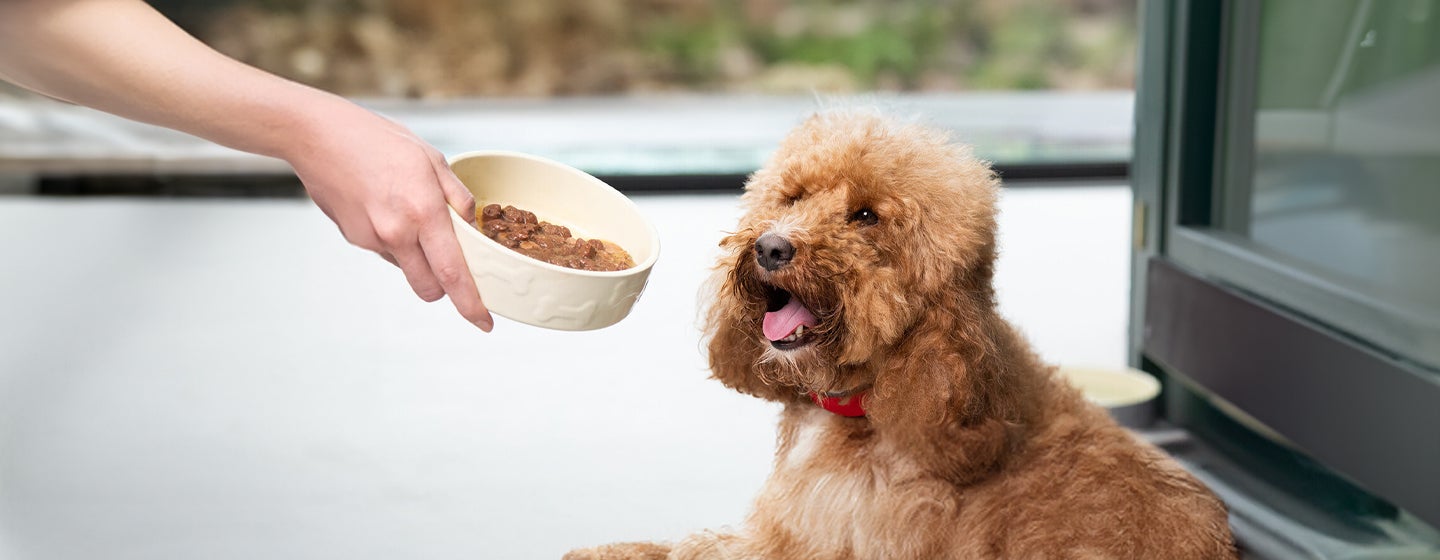
The decisions you make about your puppy’s nutrition will affect his growth, development and even his behavior. Feeding your puppy ahigh-quality, complete and balancedpuppy foodhelps set him up for a long and healthy life as an adult dog. This raises a lot of questions for first-time (and even veteran) puppy owners, though. How much should you feed your puppy and when? When should you stop feeding puppy food? Get answers to these questions and more in our complete puppy feeding guide below. Our experts answer your questions and offer advice to help set you and your puppy up for success. What to Feed a Puppy When it comes to feeding puppies, there are a lot of factors to consider. Overall nutrition, breed size and the type of food all play a role. Here’s what you need to know: Puppy Nutrition Puppies need puppy food. Feeding puppies a complete and balanced puppy food ensures they get theproper nutritionto develop and grow into healthy adult dogs. Puppy foods are formulated with a balance of nutrients to help puppies grow up healthy and happy. Look for formulas rich in high-quality proteins to support their growing bodies. Fat and carbohydrates supply the energy active and playful puppies need, while calcium supports developing teeth and bones and DHA helps support healthy brain and vision development. Feeding Puppies Large & Small Not only do puppies need puppy food, but certain breed sizes can benefit from size-specific formulas. If you have a large breed puppy, he may benefit from alarge breed-specific puppy formula. Small breeds can also benefit fromsmall breed-specific puppy formulas. Regardless of breed size, the food should be complete and balanced for growing puppies. The difference in formulas comes down to the unique needs of large and small breeds. Large dogs have a higher risk of developing joint problems, so a large breed puppy food should include proper levels of nutrients to support their healthy growth and development. Small breeds may prefer smaller kibble so they can more easily chew their food, which helps ensure they get all the nutrients they need. According to Purina Nutritionist, Karina Carbo-Johnson, MS,“Small breed-specific dog food is important due to their increased metabolism. This results in a nutrient-dense, high-energy formula which adults and puppies need to support a healthy lifestyle.” Dry vs. Wet Puppy Food Althoughdry kibbleis a popular choice, it’s not the only option. As you walk the dog food aisles, you may see both dry andwet puppy foods. This can make it harder to decide what to feed your puppy. Fortunately, as long as both the wet and dry formulas are complete and balanced for growing puppies, you can feed either one to your pup with confidence. You and your puppy may have a preference when it comes to dry versus wet. Feeding a combination of the two is also an option. According to Purina Nutritionist, Allison Millican, Ph D, “If you’re feeding your puppy a combination of wet and dry food, it is extremely important to ensure the total caloric value does not fall short or exceed their daily energy requirement. Use the calories reported on the package to understand how much wet food will replace the dry and vice versa. This allows you to calculate the amount of each product needed to meet your puppy’s nutritional requirements.” “For example,” Millican explains, “one thirteen-ounce can of wet puppy food may contain four hundred and seventy-five kilocalories and replace approximately one cup of a dry puppy formula with a similar value of kilocalories per cup. In this scenario, you could substitute a thirteen-ounce can of wet food for one cup of the daily dry food recommendation. “Remember puppies will grow at various rates and body condition may change rapidly,” she says. “As a result, it is extremely important to monitor your puppy’s body condition and adjust calorie intake as needed to prevent over- or underfeeding your puppy,” Millican continues. The brand websites and your veterinarian are great resources and can help you develop a feeding plan specifically for your puppy’s needs. How Much to Feed a Puppy Now you know what to feed your puppy, but just how much food does he need each day? Because puppies grow at such fast rates, they need to start eating a complete and balanced puppy food as soon as they’re weaned, usually between six and eight weeks. The amount of food your puppy needs depends on how much he’ll weigh at maturity. ALabrador Retrieverwill weigh more at maturity than a Russell Terrier, for example. So, the larger dog requires more food as a puppy. The chart below can help you determine how much dry food to feed your puppy. You should also review the specific feeding instructions on the back of his puppy food and consult with your veterinarian. Puppy Feeding Chart Weight at MaturityWeight at Maturity1-1/2 - 3 Months4 - 5 Months6 - 8 Months9 - 11 Months1 - 2 Years(lbs)(kg)(cups)(cups)(cups)(cups)(cups)3 - 121.4 - 5.41/2 - 12/3 - 1-1/31/2 - 1-1/2Feed as AdultFeed as Adult13 - 205.9 - 9.11/2 - 1-1/41-1/8 - 23/4 - 1-1/31 - 1-1/2Feed as Adult21 - 509.5 - 22.71/2 - 1-1/21-1/2 - 2-3/41-1/8 - 2-1/32 - 32 - 4-1/451 - 7523.1 - 34.05/8 - 2-1/31-1/2 - 41-1/2 - 3-3/42-1/2 - 4-3/42-5/8 - 6-1/476 - 10034.5 - 45.41 - 2-2/32-7/8 - 3-3/42-7/8 - 6-1/33-7/8 -75-5/8 - 11101 lbs and overOver 45.4 kg2-2/3 cups plus 1/3 cup for each 10 lbs of body weight over 100 lbs3-3/4 cups plus 1/3 cup for each 10 lbs of body weight over 100 lbs6-1/3 cups plus 1/3 cup for each 10 lbs of body weight over 100 lbs7 cups plus 1/3 cup for each 10 lbs of body weight over 100 lbs11 cups plus 1/3 cup for each 10 lbs of body weight over 100 lbs *These are generic recommendations only. Please check the package for product specific feeding recommendations. **Nestlé Purina Research indicates that avoiding overfeeding of puppies may help their development. Maintaining ideal body condition is key to encouraging proper growth in all puppies, especially large breeds. The indicated amounts are only a guideline. If your puppy becomes overweight, a reduction of your puppy’s daily food intake may be appropriate. As puppies near adulthood, their calorie needs may drop, and your puppy may begin leaving some food in the bowl. Don't misinterpret this as an indication of dislike for the food. Instead, begin offering less so your puppy doesn't overeat and stays in ideal body condition. You may wish to consult your veterinarian about a weight control program. Our puppy feeding chart is a starting point to help you determine how much dry kibble to feed your puppy. Consult the puppy food package for more specific feeding instructions or talk with your veterinarian. When to Feed a Puppy Once you know the daily feeding amount, you need to create apuppy feeding schedule. Take the total amount of food your puppy needs each day and divide that into two to three smaller meals. Give those smaller amounts to him at regular intervals each day. An easy puppy feeding schedule to follow is to feed him when you eat—at breakfast, lunch and dinner. Remember to feed him early in the evenings so he has time to digest his food before bedtime. This can help prevent accidents inside. Consistency is key. Feeding puppies at consistent times each day helps them get used to the routine. When to Stop Feeding Puppy Food Eventually, you’ll need tostop feeding puppy foodand switch him to a complete and balanced adult dog food. This transition is dictated by breed size, just as the amount to feed a puppy depends on his breed. Larger breeds may take longer to reach full maturity, so he may need puppy food for up to two years. In general, however, expect to make the transition to adult dog food between one and two years of age. Talk with your veterinarian to determine the right time to make the switch and for tips on making the change easy on your pup. What about Puppy Treats? How can you resist rewarding your puppy with some tasty treats? In fact, treats make an effective training tool It’s important to keep the 90/10 rule in mind, whether you’re rewarding your puppy for good behavior or just want him to feel loved. Of his daily calories, 90 percent should come from his complete and balanced puppy food. The other10 percent can come from treats. Following the 90/10 rule can help prevent weight gain and other health problems in adulthood. Those puppy eyes are hard to resist, but remember, you’re building—and training—a dog. Don’t give in to feeding him human food when he begs. Not only are somehuman foods toxic to dogs, but you’re rewarding undesirable behaviors, which will be harder to break later. By referencing the puppy feeding chart above and following the 90/10 rule, you can set your pup up for a long, healthy and happy life with you. Explore all our puppy foodoptions to find a tasty formula he’ll love. For more tips on puppy nutrition, behavior and more from ourexperts, visit our Pet Expertise page.
PUPPIES
1 min read
Good nutrition is essential for all dogs, but it’s especially important for growing puppies who require different nutrients than older dogs. The first year of your puppy’s life is critical to his development. Smaller breeds should receive a specific puppy formula for at least the first year of their lives whereas larger breeds that are still growing at 12 months should continue to receive puppy food until they are 18-24 months. When you’re feeding a puppy, it’s extremely important to not over-feed and to keep him at a healthy weight. Our research has shown that keeping your puppy at his ideal body condition can encourage proper growth and help prevent future health problems related to obesity. Make sure to place your puppy’s food and water bowls in a quiet, clean place that he can easily reach. Find a place that’s out of the way, so he won’t get distracted, and feed him away from places with human food like the stove, the refrigerator, or the dining table. Feeding your puppy the same amount of food at the same time every day can help keep his digestive system regular — and it’ll help make toilet training easier. Puppies eat a lot more food than an adult dog to help support all their rapid growth. From birth up until 6 months a puppy will need two to four times as much food as an adult dog! Puppies need food that helps them grow healthy and strong, and builds their immune system. Food that contains: • Protein for muscle development • Minerals like calcium and phosphorus to support bones and teeth • A good level of fat for growth and energy • Antioxidants for immunity • DHA, which is an omega fatty acid found in mother’s milk that helps with brain development and vision
Can Dogs Eat Peanuts and Peanut Butter
Can Dogs Eat Peanuts and Peanut Butter?
4 mins read
You probably already know that chocolate and grapes should not be fed to dogs. But what about another great snack: peanuts? Peanuts are not only tasty, they’re also high in nutrients such as protein and vitamins B6 and E. Could you share your favourite treat with your favourite pooch and not fear an impromptu visit to the vet later on? Keep reading to find out if dogs can eat peanuts and whether or not peanut butter is a good idea for your four-legged friend. Can dogs eat peanuts? Yes, in small amounts. Although peanuts are not toxic to dogs and your pet can enjoy their nutritional benefits when fed occasionally, peanuts can also be potentially unsafe for dogs in particular instances. For example, you should avoid salted or flavoured peanuts or any with a chocolate coating. The best peanuts to feed a dog are unsalted, dry-roasted or raw peanuts (without the shells), ideally offered sparingly as a small treat. It’s always a good idea to talk to your vet before feeding your dog any human foods. Asking for specialist advice for your particular dog can go a long way towards avoiding unusual reactions including potential allergies or gastrointestinal issues. How to feed peanuts to your dog As with any human food you intend to feed your dog, simple is best. Unsalted peanuts might not be your first choice, but for dogs, that’s exactly how snacks should be: free from any seasoning and flavourings. Make sure you remove the shells as these can be a choking hazard. You can also minimise the risk of choking by crushing the peanuts instead of offering them whole. Another good tip is to offer only a few peanuts every now and then. Even if your dog loves them, daily servings are not ideal and they can quickly nudge your dog’s calorie count over the limit.
Can Dogs Eat Onions?
3 mins read
You may be surprised to learn just how much onion we humans consume on a daily basis. Onion and onion powder are added into a vast number of recipes from soups to sauces, and this versatile vegetable is known for bringing an unforgettable flavour to dishes. With onions included as an ingredient in so many things, it’s caused many a pet parent to pause and ask the question “can dogs eat onions or foods that contain them?” Find out if onions are bad for dogs and more in this guide. Can dogs eat onions? No, dogs shouldn’t eat onions. These vegetables contain a compound called N-propyl disulphide which is highly toxic for dogs. This compound can cause the breakdown and eventual destruction of red blood cells and lead to anaemia. In extreme cases, onion poisoning can be fatal for dogs. How bad are onions for dogs? The toxic effect of onions depends on how much your dog eats and the size of your dog. According to The American Kennel Club, 100g of onion per 20kg of a dog’s weight can lead to toxic effects. This means that only a relatively small amount of onion can be deadly to a small dog. To be on the safe side, we recommend not giving any onion at all to any dog. All parts of the onion are bad for dogs, including the flesh and leaves, as well as the juices and powders that are created from this vegetable. So, if you grow onions in your garden, it’s a good idea to keep them fenced off away from opportunistic dogs. Can dogs eat cooked onions? No, dogs can’t eat cooked onions. Cooking and frying them doesn’t have an impact on how poisonous they are. Symptoms of onion toxicity If your dog’s eaten onions, they could show signs of illness within a day, but sometimes it takes several days for the signs of anaemia to become apparent. The following symptoms can develop: • Decreased appetite • Pale gums • Lethargy • Weakness • Collapse • Red tinge to urine • Vomiting and/or diarrhoea • Elevated heart rate • Panting If you notice your dog displaying any of the symptoms listed above, take them to the vet straight away for diagnosis and treatment. A speedy response can make the world of difference. How are dogs treated for onion toxicity? The treatment for onion toxicity depends on how much onion your dog has eaten and when they had it. If you discover that your dog has eaten onion and you manage to get them to the vet soon enough, the vet may be able to induce vomiting to get the onion out of your dog’s system before it can be digested. However, this only works as a preventative measure if you can take action quickly enough. If your dog develops symptoms of onion toxicity, they will need supportive treatment. In extreme cases where the dog is in a critical condition, a blood transfusion may be necessary. If your dog’s red blood cells have been severely affected, your vet will also provide ongoing care to help return them to their normal happy and healthy selves. Preventing onion toxicity Always keep onions out of reach of your dog as these vegetables can be extremely dangerous if ingested. Also, be sure to check the ingredients before offering any human foods to your dog as a lot of ready-made soups and sauces contain onions. Better yet, avoid human foods entirely and only feed your dog foods and treats specially created for dogs. Now you know that onions are bad for dogs, why not learn more about the foods your dog can enjoy and what to avoid? Read our guide on can dogs eat pineapple, next.
Feeding & Nutrition
Can Dogs Eat Ice Cream
Can Dogs Eat Ice Cream?
3 mins read
There’s nothing better than tucking into a soft serve ice cream at the seaside on a hot summer’s day. It’s the perfect treat for keeping cool and something that all the family can enjoy, but does that extend to your four-legged friend too? It’s highly likely your dog will be there are your feet, begging with their best puppy dog eyes – which raises the question, can dogs eat ice cream? We’ve put together this guide to tell you all you need to know about whether dogs can have ice cream. Keep reading to find out more. Can dogs eat ice cream? It’s best to avoid giving your dog ice cream. While it’s not toxic or seriously harmful, dogs actually have a hard time digesting dairy as, after they’re weaned as puppies, they lose the enzyme needed to digest the lactose in milk. The odd lick is unlikely to prompt a visit to the vet, but it’s better to be safe than sorry and avoid ice cream entirely. Is ice cream good for dogs? Dogs have difficulty digesting milk and as such, feeding them dairy products such as ice cream can lead to diarrhoea and vomiting. Another factor to consider in the ‘can dogs have ice cream’ debate is that it’s often packed full of sugars and a single scoop will likely contain near to your dog’s daily recommend number of calories which can eventually lead to dental disease, diabetes or weight issues. Not to mention, there’s a wealth of ice cream flavours which are very hazardous to dogs such as chocolate and rum and raisin which are both highly toxic to dogs. Additionally, some of the ingredients added to ice cream, such as peanut butter, can contain xylitol which is also toxic. Sugar-free ice cream can also contain xylitol. What about vegan ice cream? While vegan ice cream won’t contain dairy, it may be made with certain nut-based milks which can be harmful for dogs and as with normal ice cream, there may be sugars, additives or ingredients in the mix which are also hazardous. Dog friendly ice cream alternatives To keep your four-legged friend safe, we recommend putting down the scoop and opting for a dog-friendly ice cream alternative instead. Here are some ideas: Frozen bananas One very popular option with pooch owners is to freeze bananas and then blend them. Do not feed whole frozen chunks as these can be a choking hazard.

Pagination

  • First page
  • Previous page
  • …
  • Page 10
  • Page 11
  • Page 12
  • Page 13
  • Page 14
  • Page 15
  • Page 16
  • Page 17
  • Page 18
  • …
  • Next page
  • Last page
Purina Pet Club logo

Join Purina Pet Club for expert tips, helpful advice, exclusive offers and rewards.

Join the Club
Nourishing pets Purina pets grid card
Purina Pet Club logo

Join Purina Pet Club for expert tips, helpful advice, exclusive offers and rewards.

Join the Club
Nourishing pets Purina pets grid card
  • Cat
    • Care & Advice
    • Find a Pet
    • Food
    • Our Brands
  • Dog
    • Care & Advice
    • Find a Pet
    • Food
    • Our Brands
  • About Us
    • Our Mission
    • Our History
    • Our Purina Promise
    • Purina In The Community
  • Other
    • Join Purina Pet Club
    • Breed Selector
    • Contact Us
  • Cat
    • Care & Advice
    • Find a Pet
    • Food
    • Our Brands
  • Dog
    • Care & Advice
    • Find a Pet
    • Food
    • Our Brands
  • About Us
    • Our Mission
    • Our History
    • Our Purina Promise
    • Purina In The Community
  • Other
    • Join Purina Pet Club
    • Breed Selector
    • Contact Us
  • Cat
    • Care & Advice
    • Find a Pet
    • Food
    • Our Brands
  • Dog
    • Care & Advice
    • Find a Pet
    • Food
    • Our Brands
  • About Us
    • Our Mission
    • Our History
    • Our Purina Promise
    • Purina In The Community
  • Other
    • Join Purina Pet Club
    • Breed Selector
    • Contact Us
  • Cat
    • Care & Advice
    • Find a Pet
    • Food
    • Our Brands
  • Dog
    • Care & Advice
    • Find a Pet
    • Food
    • Our Brands
  • About Us
    • Our Mission
    • Our History
    • Our Purina Promise
    • Purina In The Community
  • Other
    • Join Purina Pet Club
    • Breed Selector
    • Contact Us
© 2026 Purina. All Rights Reserved.

©Reg. Trademark of Nestlé S.A.

Terms & Conditions
Privacy Policy
Cookies
© 2026 Purina. All Rights Reserved.

©Reg. Trademark of Nestlé S.A.

Terms & Conditions
Privacy Policy
Cookies
© 2026 Purina. All Rights Reserved.