Sorry, you need to enable JavaScript to visit this website.
Skip to main content
Feeding Older Dogs
Feeding Older Dogs
4 mins read
When your dog reaches the age of about seven – a little younger in large breeds (five to six) and older in small breeds (around nine) – they’re generally considered to be ‘senior’. When they reach this age, you’ll need to adjust their diet to support them better. Find out more about feeding older dogs in this guide. You might notice your dog wanting to take life a little easier, as we all do when we get a little older! There will also be some less visible changes as they approach their senior stage of life; their bodies and digestion start to change and their immune system may need some extra support. To get the best for your furry friend, it can be a good idea to gradually switch them to a complete, balanced “senior” dog food containing good quality protein, as these are specifically formulated to fit with your dog’s changing nutritional needs and eating habits. Managing your senior dog'sintake As senior dogs tend to be less active, and have a slower metabolism, you might notice your pet putting on a bit of weight as they get older. As they get on in years, changing to a lower calorie diet can be a good idea. As older dogs tend to be less active, particularly if they have mobility issues such as osteoarthritis, they can be more prone to obesity. While some health problems can lead to obesity, being overweight can cause health problems too, and put more strain on joints. Because of this, it’s very important to monitor your dog’s body condition regularly. If you think your dog is overweight, make an appointment to speak to your vet to discuss the best way forward. It may be a simple case that your dog is eating too much, or they may have an underlying medical problem that can be addressed. Either way, your vet may recommend a more calorie-restricted weight loss diet or a specialist diet dog food for older dogs.
Health
Yeast Infection in Dogs: Everything You Need to Know
4 mins read
One of the most common infections in dogs is yeast infection. Learn what to do when your dog starts itching inconsolably and find out what treatments are the most effective. Does your dog suffer from itchy skin, swelling or exaggerated drooling? There are many underlying conditions for such symptoms, but one of the most common infections in dogs might be the culprit. While you’re waiting for your vet appointment, read on to learn more about spotting and tackling yeast infection in dogs.
Why Does My Dog Bark?
3 mins read
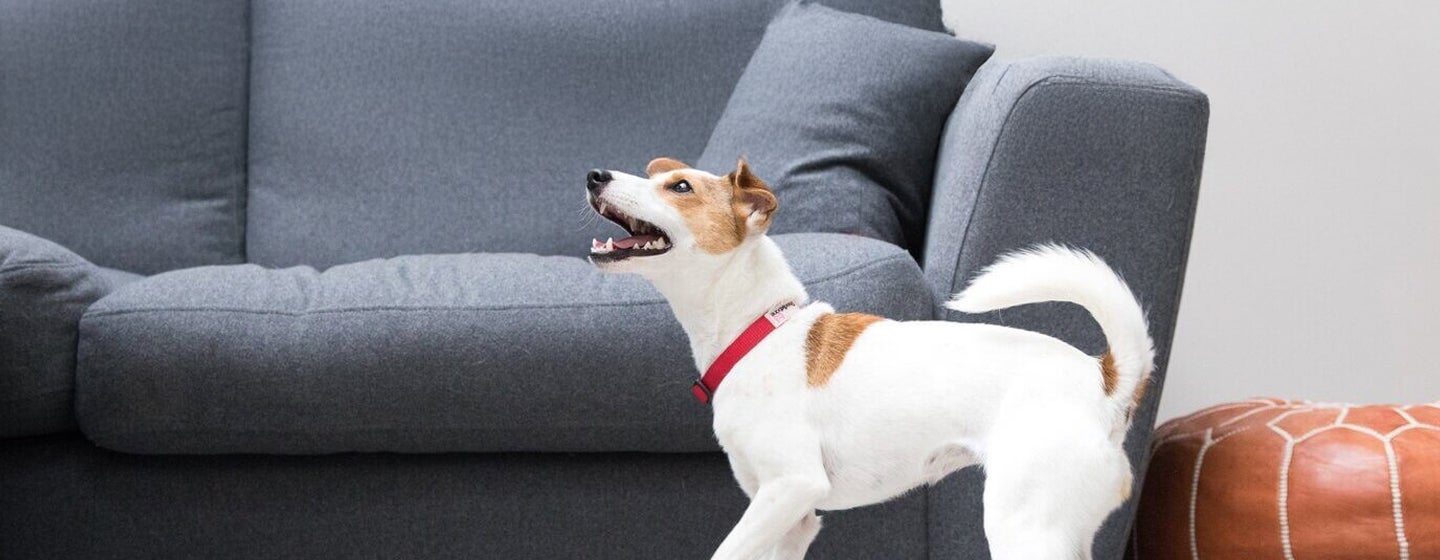
Even though some dogs will make more noise than others, all dogs bark. Whether you have a tiny Chihuahua or a fully-grown Alsatian, you’ve probably heard them barking in a wide variety of situations. You might even be able to tell why they’re barking – for example, many dogs will bark if they encounter something that they perceive as threatening or even when they just want to say hello!
Why Do Cats Sleep So Much?
4 mins read
It’s no secret that cats love to sleep, but owners are often puzzled by this behaviour. How long do cats sleep, and how do you know if your cat is sleeping too much? This article will explain how and why cats love to sleep so much. How long do cats sleep for? On average, cats sleep between 13 and 16 hours in a 24-hour day; that’s roughly twice the amount that their human owners require. Although this does vary depending on age and personality, your cat will certainly spend far more time napping than you. Why do cats sleep so much? Fundamentally, cats are predators, and sleeping is vital to conserve their energy after hunts. Cats are anatomically and physiologically designedto hunt for their food, even if now you provide it for them in a bowl. Wild cats are commonly observed hunting their prey and then sleeping for extended periods of time; this is because hunting demands a huge amount of energy. Domestic cats are no different, and even if they are only hunting their favourite toy or chasing after a mouse, the effect is the same: they employ energy intensive techniques, such as stalking, pouncing, chasing and climbing. Your cat is on alert throughout their ‘hunt’, using high levels of adrenaline and energy to keep their body fuelled. All this means that despite the relatively short period when your cat is active, they use up disproportionately large energy reserves, resulting in the need for a well-deserved cat nap! Why do cats have a cat-nap? Cat sleeping habits aren’t quite like our own. Contrary to popular belief, cats aren’t nocturnal; they are crepuscular, meaning they’re most active around dawn and dusk. This sleeping pattern is due to their hunting instinct, which evolved so that they would be awake when their prey is at its most active. Cat’s eyes are also more adapted to night vision, allowing them to observe movement more clearly in low light. If your cat has been at all active during the night, their depleted energy reserves will mean that they will probably start the day with a nap. Although many cats continue to stay active during the night, many cats sleeping habits have adapted to sleeping during the night, as their owners do. More universal, though, is their choice to wake up at dawn to demand their breakfast!
Why Do Cats Purr?
Why Do Cats Purr?
7 mins read
Curling up with your cat as she purrs is a comfort to all pet owners. It’s a sign she’s happy, content and feeling settled on your lap, enjoying lots of fuss and attention – or is it? We all know that cats express their feelings by purring, in the same way that when we’re happy we smile and dogs wag their tails. Purring cats aren’t always happy cats though, and there’s lots of mystery around why they purr and how they make this mystical sound. Previous scientific research has shown that cats don’t just purr when they’re happy but also when they’re distressed or afraid. Purring is a defence mechanism and a way to keep calm in stressful situations. You’ll often hear your cat purring at the vets as she’s being examined, but be careful not to mistake this as a happy sound! It’s more likely that your cat will be purring to calm herself down rather than enjoying the examination.
Why are dogs so loyal?
4 mins read
There is no denying that one of your dog’s most defining traits is their loyalty. This loyalty can be overwhelming and humbling, and has often been cited as an example of what human beings can learn from dogs. But life lessons aside, where does your dog’s loyalty come from? Yes, you feed them and play with them and have your own deep sense of love for them, but does that fully explain the depth of emotion they hold for you? In this article, we explore loyal dogs, why dogs are loyal and when that loyalty may need to be contained. Are dogs really loyal? The concept of a loyal dog has been peddled so much in today’s media and advertisements that you can be forgiven for questioning its premise: are dogs really loyal? Let us get the question out of the way: yes, they really are. The stories of dogs who wait endlessly for their owners or who are overjoyed to greet them years later are not made up. You can see the evidence in your own dog, who is delighted when you return home from work and greets you as if they haven’t seen you in weeks. If that is not deep loyalty, we do not know what is. So, what makes a loyal dog? There are several theories on where your dog’s loyalty comes from and why it is so deep. Here we explore a few of the explanations for your dog’s loyalty, ranked from simple to intriguing. The simple explanation: you give them food The simplest explanation for your dog’s loyalty is that you give them food and shelter. Your dog is grateful to you for the essentials of life that you provide and so is loyal to you. There is a scientific basis for this: domestic dogs are descended from wolves, which man once took in and tamed with shelter and food in return for them acting as guard dogs. This reciprocal relationship remains in your dog’s genes and their loyalty is a by-product of it. Of course, this would mean that loyal dogs adore anyone who feeds them. This is also largely true, as dogs do tend to grow more attached to the family member that gives them their food. But it is not the only explanation. Looking to dog psychology for answers: dogs are pack animals Dogs are also pack animals and long to belong to a pack. They are much like humans in that way – it is said that no man is an island and the same can be said for a dog. To your loyal dog, your family is their pack and they have adopted you as their own. Loyalty in a pack is crucial. In order for a pack to survive in the wild, their members must work together to overcome dangers. Trusting, co-operating and putting the pack’s interests first are all a natural part of surviving. It would explain why dogs often put their own lives in danger to protect their owners; their pack instincts require it of them. But that cannot explain everything. After all, your dog still loves you when you return from a long vacation and you have not been feeding them during that time. And what about Hachito, the loyal dog who used to greet his owner each day at the train station after work – and continued to wait for him for nine years after he died? Neither pack instincts nor reciprocal relationships can explain that. But something else might. The intriguing explanation: dogs may love In 2005, Science Direct held an experiment on canine behaviour, where they presented dogs with their owner’s scent, a scent of a stranger and the scent of food. Brain scans were taken of the dog as they approached each scent. The study hypothesised that since smell is so important to dogs, it would be the best way to understand how canine brains work. They were right. Not only did dogs react more strongly to the scent of their owners, the part of the brain associated with enjoyment and positive emotions lit up when they were given their owner’s scent. Your loyal dog does recognise you. The same patterns in humans would usually be associated with love. In another experiment, a dog was allowed to watch a stranger be rude to their owner. When the dog was then allowed to interact with the stranger and the owner, the dog actively snubbed the stranger. If that is not loyalty, we do not know what is.
What to Expect on Your Puppy's First Vet Visit
7 mins read
Get ready for your pup's first health check with our useful tips. Your puppy’s first vet visit Before you bring your adorable new dog home, you should be planning for your puppy’s first vet visit. Register with a local vet to make sure you’re prepared and when you have your new puppy, arrange an appointment and let them know it's a new puppy health check. Your vet may want to allocate your puppy a bit more time than the usual 10-minute check-up just to make sure everything gets off on the right foot.
Health
What Is Dog Target Training & How Do You Do It?
10 mins read
Dog target training may be a less well-known way to train your dog, but it is definitely picking up in popularity among dog owners. No other training technique hones your dog’s concentration skills as effectively as target training, and the process can help your dog develop their cognitive abilities. Target stick dog training is a great technique to teach your dog, but what exactly is it and how do you begin to train your dog with this method? In this article, we explore all the questions you may have about target training and the benefits. What is dog target training? Target training is a method where you teach your dog to identify specific objects and react to those objects in a certain way. For instance, if you show your dog a mat, your dog’s first reaction will be to use all of their body to respond to that object—in other words, they will lie down on the mat. But what if you could teach your dog to only touch their nose to the mat or only put their front paws on it? This way, your dog will be responding to the mat in a specific way (or with a trained action) by using only one body part. You can see why dog target training is growing popular: it teaches your dog better motor control and concentration skills. It also allows them to identify objects better, which can be very useful if you want to train them to tidy up their toys or close the refrigerator door! How do you start target training? The easiest way to get your dog started on target training is to teach them to identify a specific object with a body part. Begin by using your hand as your dog will probably already be familiar with hand signals and is already comfortable around you. You will need a clicker, treats and lots of fuss and praise for this, as these reinforce positive behaviour. • Present your hand to your dog, around half an inch away from his nose. If your dog looks at your hand, click and reward your dog. • If they touch their nose to your palm, click and reward them. • Keep repeating this action until they can follow your palm to the left, right and above them, all the while touching their nose to it. Make sure to positively reward your dog with lots of praise and treats—that is how they know what you want them to do! Once your dog is good at focusing on an object and touching it with their nose, it’s time to progress onto target stick dog training.
What Can Dogs Chew On
What Can Dogs Chew On?
5 mins read
Dog dental care can be tricky, especially when they’re picking up different items with their mouth that may not be good for them. Knowing exactly what’s okay to pick up and what isn’t is also difficult. Carry on reading to find out what dogs can chew and what’s not safe. What isn’t safe for my dog to chew? Can dogs chew sticks? Throwing sticks in the park has been a staple of any dog walk for many years, but did you know that vets have advised that it may not be a good idea? This is because dogs may receive a splinter from carrying the stick. If your dog does begin to pick up and carry sticks fear not, most of the time they won’t receive a splinter. It may be worthwhile to always check your dog’s mouth after carrying a stick and if possible, encourage them to carry something else. Toys and balls are always a good alternative for dogs that like to carry items whilst they walk. Think of it as a great opportunity to choose some new toys for your dog! Can dogs chew stones? Many dogs enjoy playing with small stones that they find whilst out on walks and in the garden. This is because they usually have a specific scent from being outside and are the perfect size to fit in a dog’s mouth. However, if your dog chews on them frequently, it will wear down the enamel on their teeth. Enamel is the protective layer of the teeth and if it’s worn down too much, your dog may experience discomfort when eating. That’s why it is important to encourage your dog to chew safer items such as dog toys, instead of small stones from the garden. Should dogs chew plastic? Although the majority of plastic can look soft, if it splits it may become sharp. This means if your dog tends to chew toys such as Frisbees or plastic objects found around the house, they could inadvertently hurt themselves. We recommend keeping plastic out of a dog’s reach if possible, along with checking toys such as Frisbees regularly for splits and cracks. If a plastic toy is beginning to crack, it may be time to throw it away and get a new one. Can dogs have bones? Many dog owners like to treat their pooch to a real bone to chew on every now and again. Whilst these bones do make for a tasty treat, they can sometimes become harmful. This is because the bones can split and fragment, hurting your dog, and small parts may be swallowed which can cause intestinal discomfort. We recommend you watch your dog when chewing on a bone to make sure this doesn’t happen. It may also be worth limiting the amount of time they have with the bone. Better yet, if possible, you could purchase a synthetic bone made for dogs to chew. These bones are much safer and are designed for pets to use, making them a safe and tasty treat for your dog to enjoy. Can dogs chew corn on the cob? If someone asked you to name items you shouldn’t let your dog chew on, you probably wouldn’t say corn on the cob. However, corn on the cobs are best kept out of the way as they can be chewed into small pieces and swallowed. As well as potentially scratching your dog’s mouth, pieces of corn on the cob can be too big to fit through the intestines of smaller breeds. If your dog likes scavenging food (and many dogs do!) then make sure they can’t grab a corn on the cob from the dinner table, kitchen or bin.
Health
Wet or dry cat food?
4 mins read
When it comes to choosing wet or dry cat food, the information can be overwhelming. Conflicting information and the sheer amount of choice on offer can all make choosing your cat’s diet seem difficult. Go back to the basics with your cat’s diet in this article to learn all about the benefits and drawbacks of both wet or dry cat food, so you can make the right choice for your pet. What do cats need in their diet? Every cat requires a total of 41 essential micronutrients from their food each day – whether it be from wet or dry cat food. These micronutrients are ‘essential’ because they cannot be manufactured in the body, and they are necessary for normal, healthy function. Cats are obligate carnivores who need to eat meat, and as such they can’t be fed a vegetarian diet without developing malnutrition problems. A proportion of their daily nutrients must come from animal sources, specifically the amino acids taurine and arginine, the fatty acid arachidonic acid, and pre-formed vitamin A. What do cats like in their food? Just like humans, when it comes to food, cats enjoy something tasty! Although they have far fewer taste buds than other animals—a mere 475 to dogs’ 1,700—they do have some interesting appetite quirks. A cat’s sensitivity to bitter tastes is 400 times greater than that of a dog’s, but they lack the taste buds to be able to enjoy sweet flavours. Texture and the shape are also important factors for cats when it comes to their kibble. Cats’ sense of smell is superb, and is an essential part of appealing to their appetite. Food odours give pleasure, enhance enjoyment of food, and provide your cat with their own sense of nutritional information.

Pagination

  • First page
  • Previous page
  • …
  • Page 15
  • Page 16
  • Page 17
  • Page 18
  • Page 19
  • Page 20
  • Page 21
  • Page 22
  • Page 23
  • …
  • Next page
  • Last page
Purina Pet Club logo

Join Purina Pet Club for expert tips, helpful advice, exclusive offers and rewards.

Join the Club
Nourishing pets Purina pets grid card
Purina Pet Club logo

Join Purina Pet Club for expert tips, helpful advice, exclusive offers and rewards.

Join the Club
Nourishing pets Purina pets grid card
  • Cat
    • Care & Advice
    • Find a Pet
    • Food
    • Our Brands
  • Dog
    • Care & Advice
    • Find a Pet
    • Food
    • Our Brands
  • About Us
    • Our Mission
    • Our History
    • Our Purina Promise
    • Purina In The Community
  • Other
    • Join Purina Pet Club
    • Breed Selector
    • Contact Us
  • Cat
    • Care & Advice
    • Find a Pet
    • Food
    • Our Brands
  • Dog
    • Care & Advice
    • Find a Pet
    • Food
    • Our Brands
  • About Us
    • Our Mission
    • Our History
    • Our Purina Promise
    • Purina In The Community
  • Other
    • Join Purina Pet Club
    • Breed Selector
    • Contact Us
  • Cat
    • Care & Advice
    • Find a Pet
    • Food
    • Our Brands
  • Dog
    • Care & Advice
    • Find a Pet
    • Food
    • Our Brands
  • About Us
    • Our Mission
    • Our History
    • Our Purina Promise
    • Purina In The Community
  • Other
    • Join Purina Pet Club
    • Breed Selector
    • Contact Us
  • Cat
    • Care & Advice
    • Find a Pet
    • Food
    • Our Brands
  • Dog
    • Care & Advice
    • Find a Pet
    • Food
    • Our Brands
  • About Us
    • Our Mission
    • Our History
    • Our Purina Promise
    • Purina In The Community
  • Other
    • Join Purina Pet Club
    • Breed Selector
    • Contact Us
© 2026 Purina. All Rights Reserved.

©Reg. Trademark of Nestlé S.A.

Terms & Conditions
Privacy Policy
Cookies
© 2026 Purina. All Rights Reserved.

©Reg. Trademark of Nestlé S.A.

Terms & Conditions
Privacy Policy
Cookies
© 2026 Purina. All Rights Reserved.