Sorry, you need to enable JavaScript to visit this website.
Skip to main content
Down Syndrome-Like Symptoms in Cats
2 mins read
As cats can suffer from many of the same disorders as humans, many often find themselves wondering, can cats have down-syndrome? In this article we explore the topic and provide the answers to all of your questions. Can cats have Down syndrome? This question has become more common in recent years due to the easier sharing of images afforded by the Internet. Getting to see more cat photos means that we have the opportunity to get to know unique cats that we wouldn’t otherwise have seen. You might have seen or heard about cats that look and behave a little ‘differently’, becoming known on the Internet for being ‘Down syndrome cats.’ Although the physical and behavioural symptoms of these cats may present like a type of feline Down syndrome, it is impossible for them to truly be ‘Down syndrome’, as this is something that exists solely in humans. What is Down syndrome? Down syndrome is a congenital disorder in humans, affecting the people that have it both physically and intellectually. It arises from a chromosomal defect. In humans, the nucleus of each cell contains 23 pairs of chromosomes, and people with Down syndrome have three copies - either complete or partial - of chromosome 21. They tend to have certain physical characteristics like low muscle tone, short stature and a flat nasal bridge, and will also exhibit some degree of learning difficulty.
Dog Puberty
Dog Puberty
6 mins read
Dog puberty usually occurs when your pup is between 7 months and 2 years old and as with humans, it can bring a whole load of behavioural and physical changes. Find out everything you need to know about the signs of puberty in puppies and what you can expect in this handy guide. There is one thing that all puppy owners can rely on – and that is that their lovely cute, biddable puppy will one day grow up to be a canine adolescent, which brings with it both behavioural and physical changes. When does dog puberty occur? Dog puberty is the period between sexual maturity and social maturity and can happen between around seven months to almost two years, depending on the breed (larger breeds take longer to develop). Another way of looking at it is as a time when their hormones are running ahead of their brains – pretty much like with human teenagers! Behavioural changes during dog puberty During this stage of dog puberty, one of the first things you may notice is that your puppy’s behaviour starts to change. Things that you have taught them may seem to be inadvertently forgotten and they appear to ‘forget’ the simplest things, whether this is toilet training, recall or walking nicely on the lead. There may be changes in their interactions with you as they become clingier or, at other times, the puppy who used to hang on your every word seems not to notice you even exist! This is a time when your puppy is starting to look at the world through the eyes of an independent adult and reassessing their behaviour strategies. You may see your puppy behaving fearfully or reacting to things they have apparently taken in their stride in the past. Other dogs start to treat them differently, as they no longer have the ‘puppy privileges’ they used to enjoy. They have to rethink their social skills at a time when their hormones are raging as an adolescent male dog has much higher testosterone levels than adult male dogs! This can lead to competitiveness and even aggression.
Health
Dog Proof Your Home with a Dog Friendly Garden
5 mins read
Most breeders will ask that you wait until your new puppy is eight weeks old before they’ll let you pick them up – which might feel like an eternity! This is a great opportunity to start dog proofing your home and preparing for your new arrival, so that when you bring your puppy or new dog home, your house will be a safe and welcoming environment.
Puppy Care
Dog Hot Spots and How to Treat Them
4 mins read
Hot spots in dogs are a common skin condition. Find out what they are and how to treat them once they show up, so you can get your dog back to their usual happy self. If you’ve noticed your dog itching more than usual and discovered a moist red spot on their skin under their fur, your beloved canine friend might be dealing with a skin condition known as dog hot spots. In this article we will look at what they are and how they can be treated effectively so your dog can get back to their normal happy self. What are dog hot spots? Dog hot spots are areas of infected skin that look red, wet and sometimes raised. Officially known as Moist Dermatitis, hot spots can be found anywhere on the body and can increase in size very quickly. Your dog will experience them as itchy and sometimes painful patches and will often try to soothe hot spots with scratching, licking or biting.
Health
Dog Ear Problems: Symptoms, Causes & Treatment
3 mins read
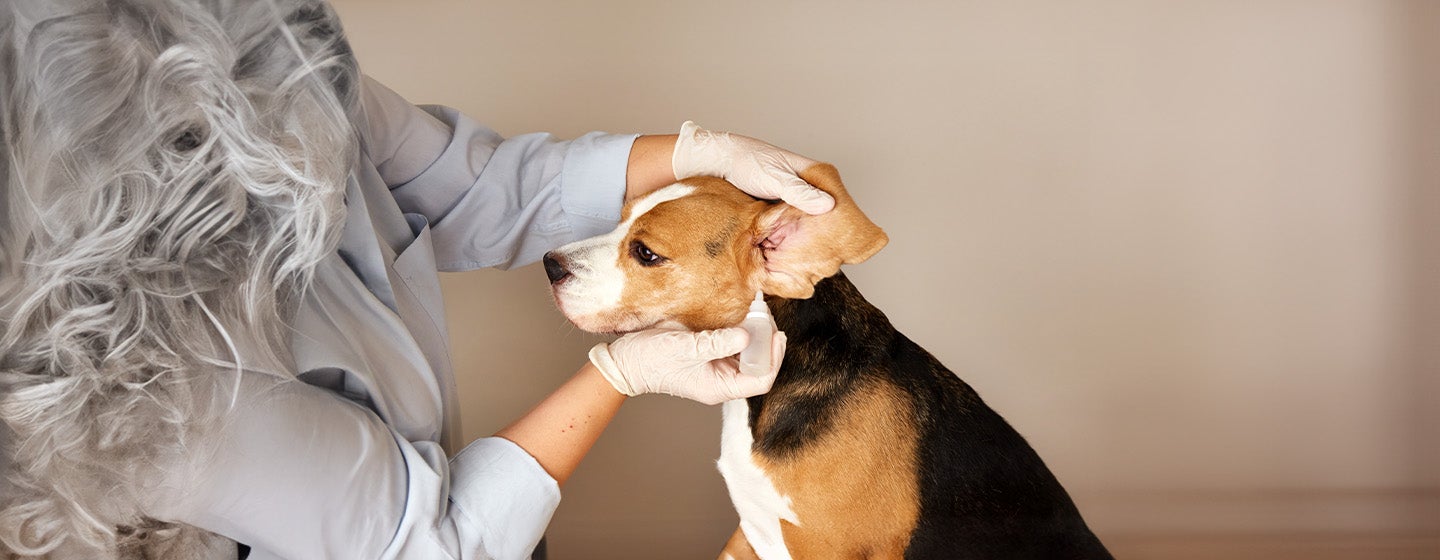
Ear infections in dogs aren’t uncommon, but with the right care and treatment you can keep your dog’s ears nice and clean, and prevent further earache for both of you! Symptoms of dog ear problems Your dog’s ears really benefit from a regular check-up, which is something you can share with them as part of an enjoyable grooming routine. Look out for any changes in your dog’s ear health; you know them best. Your dog's ears should always be clean and without any thick brown or green waxy discharge. There should also be no redness, itchiness or unusual smells coming from them. Unusual behaviour in your canine companion might also indicate a problem. If they start to scratch their ears frequently, shake their head more than normal, hold their head to one side, or rub one side of their face along the carpet or grass, it’s best to take them to your vet for a thorough ear examination. Severe ear problems and ear infections in dogs can have a more serious effect, such as loss of balance, which can be distressing for you both. (Bear in mind that balance loss may also be due to other causes, so always visit your vet for advice in such instances – that way you’ll know if something else is wrong.)
Dog Acne Information and Treatment
4 mins read
It may surprise you to learn that dogs can get acne just like humans! Find out all about the causes and symptoms of acne in dogs and what you can do about it here. Much like with humans, dogs can get acne when they start to go through puberty. In dogs, puberty occurs between five to eight months old which is when dog acne will be likely to appear, and in most cases it will disappear on its own by the time they reach one year old. Dog acne is more common than you might think and generally affects the facial area including lips, chins and muzzles. Cases can range from mild to severe and it’s important for dog owners to recognise the signs and know when to seek help from a vet. Keep reading to find out the possible causes and symptoms of dog acne and the currently available treatment options for your dog. Causes of dog acne Acne in dogs is caused by the same things that cause human acne, a combination of excess oily sebum and dead skin cells mixing together which causes the hair follicles to get clogged, resulting in raised and red lumps, blackheads or whiteheads. There can be numerous reasons why this may occur including genetic factors, hormonal changes, food and environmental allergies and in some cases, trauma. Additionally, sometimes dog acne can just be a normal part of adolescence which will occur no matter what preventative measures you may take.
Health
Do Dogs Dream?
Do Dogs Dream?
6 mins read
We've all seen the adorable twitch of paws and heard the odd woof whilst our dogs are sleeping, but do dogs really dream? Find out more and learn about what dogs dream about with Purina. All dog owners have seen and heard their pet’s adorable dreamy antics. Maybe you’ve heard a sleepy woof or seen them paddle their paws; perhaps you’ve even noticed a subtle growl. But do dogs really dream? And if they can, then what do dogs dream about? Do dogs dream? Let’s look at this scientifically: we know that human beings have dreams because research has shown that the electrical impulses in the brain can become active during sleep. Researchers have used similar techniques to monitor our canine companions, in order to determine whether those cute night time shuffles are evidence of dreams, or something different. Using an electroencephalogram to test for brain wave activity during sleep in dogs, scientists discovered that we have even more in common with our furry friends than we thought! It seems very likely that dogs do dream, just as we do. Dog sleep patterns and dreams You might already know that human beings have different stages of sleep during the night, and that dreaming is most likely to occur at a specific point in the sleep cycle. Incredibly, this seems to be true for dogs as well! Your pet will enter a stage of sleep known as ‘REM’, which stands for rapid eye movement. At this point, your dog’s breathing will begin to sound more irregular and their eyes will start to move around more rapidly. You may notice their eyelids flickering. It is during this stage of sleep that dog dreams are most likely to happen.
Behaviour & Training
Diabetes in Dogs - Causes and Symptoms
4 mins read
Diabetes is a complex disease that most often develops in older dogs. Just like in humans, diabetes in dogs can cause a range of unpleasant symptoms. However, with careful management, this condition doesn’t need to affect their quality of life. What is diabetes in dogs? Dog diabetes, or ‘canine diabetes’, is caused by either a lack of insulin in your dog’s body or, in some cases, an ‘inadequate’ biological response to it. When your dog eats, the food is broken down. One of the components of their food, glucose, is carried to their cells by insulin. If your dog can’t produce enough insulin themselves, or the insulin they have isn’t used properly, the glucose cannot be used properly either. This means your dog’s blood sugar levels will rise, which can lead to adverse side effects. What causes diabetes in dogs? Just like in humans, it isn’t completely certain why some dogs develop diabetes. Some dogs may be more genetically prone to developing the condition. It is known, however, that being overweight can increase the risk of your dog developing diabetes. This may be because obesity causes cells in your dog’s body to become more resistant to insulin. If your dog develops diabetes, it is most likely to happen when they start to reach their senior years. Female dogs and neutered dogs may also be more at risk.
Health
Cushing’s Disease in Dogs: Symptoms and Treatment
4 mins read
Cushing’s disease is a hormonal condition that is relatively common in middle-aged or older dogs. Read our guide to find out what it is, what’s causing it and how you can care for a dog that has been diagnosed with the disease. Your dog’s energy levels are likely to decrease as they get older, but did you know that this could point to something other than old age? In some cases, this is one of the signs of a disease known as Cushing’s Syndrome in dogs. Here is what you need to know. What is Cushing’s disease in dogs? Cushing’s disease, also known as hyperadrenocorticism, is more common in dogs over 7 years of age. The disease involves excess production of cortisol, a naturally produced steroid that is often referred to as the stress hormone. Certain levels of this hormone within the body are important and contribute to functions such as the immune system or ‘fight or flight’ response. However, the abnormally high levels seen in Cushing’s causes an imbalance of hormone regulation within the body and leads to the symptoms associated with the disease. The most common cause of Cushing’s disease in dogs is a benign tumour of the pituitary gland, a structure that is located in the brain. The pituitary gland sends messages to the adrenal glands to produce cortisol. In cases of pituitary-dependant Cushing’s disease, these messages continue to be sent to the adrenal glands even if there is already enough cortisol, leading to higher levels in the body. Less commonly, Cushing’s disease can be caused by tumours of the adrenal glands themselves, this is adrenal-dependent disease. It can also occur if a pet is receiving high doses of steroid treatment for a different medical condition. Symptoms of Cushing’s in dogs? Cushing’s in dogs will often go unnoticed for a while, and tends to progress very gradually. Because the disease affects middle-aged and senior dogs, the symptoms are often attributed to ageing at first. Cortisol is a vital hormone for different functions and organs, meaning that it acts in various ways around the body. Therefore, increased production of the hormone can affect a number of different body systems, and result in various symptoms many of which are non-specific. The list of symptoms of Cushing’s in dogs will differ between individuals and you should consult the vet even if you don’t notice all the signs listed below.
Health
COVID-19 and Cats and Dogs: All You Need to Know
2 mins read
With the outbreak of COVID-19, many pet owners have been wondering what this new normal could mean for them and their pets. Find out all you need to know about caring for your pets and how to look after them during this uncertain time. You ask, we answer! Find here our answers to FAQs related to COVID-19 and Pets. Where can I find the latest information about Covid-19 and pets? Since this is a rapidly evolving situation, we encourage you to keep up to date with communications from official and credible sources such as COVID-19 and animal welfare | COVID-19 (coronavirus) information and advice | NZ Government (mpi.govt.nz) Is Purina able to produce pet food and treats during this crisis? Purina’s products (pet food and pet snacks) are included in the list of industries considered as “essential critical infrastructure”. As a result, Purina is exempt from closures or stay-at-home orders. Purina is taking significant steps to ensure that we can service our consumers at the highest levels possible.
Health

Pagination

  • First page
  • Previous page
  • …
  • Page 31
  • Page 32
  • Page 33
  • Page 34
  • Page 35
  • Page 36
  • Page 37
  • Page 38
  • Page 39
  • …
  • Next page
  • Last page
Purina Pet Club logo

Join Purina Pet Club for expert tips, helpful advice, exclusive offers and rewards.

Join the Club
Nourishing pets Purina pets grid card
Purina Pet Club logo

Join Purina Pet Club for expert tips, helpful advice, exclusive offers and rewards.

Join the Club
Nourishing pets Purina pets grid card
  • Cat
    • Care & Advice
    • Find a Pet
    • Food
    • Our Brands
  • Dog
    • Care & Advice
    • Find a Pet
    • Food
    • Our Brands
  • About Us
    • Our Mission
    • Our History
    • Our Purina Promise
    • Purina In The Community
  • Other
    • Join Purina Pet Club
    • Breed Selector
    • Contact Us
  • Cat
    • Care & Advice
    • Find a Pet
    • Food
    • Our Brands
  • Dog
    • Care & Advice
    • Find a Pet
    • Food
    • Our Brands
  • About Us
    • Our Mission
    • Our History
    • Our Purina Promise
    • Purina In The Community
  • Other
    • Join Purina Pet Club
    • Breed Selector
    • Contact Us
  • Cat
    • Care & Advice
    • Find a Pet
    • Food
    • Our Brands
  • Dog
    • Care & Advice
    • Find a Pet
    • Food
    • Our Brands
  • About Us
    • Our Mission
    • Our History
    • Our Purina Promise
    • Purina In The Community
  • Other
    • Join Purina Pet Club
    • Breed Selector
    • Contact Us
  • Cat
    • Care & Advice
    • Find a Pet
    • Food
    • Our Brands
  • Dog
    • Care & Advice
    • Find a Pet
    • Food
    • Our Brands
  • About Us
    • Our Mission
    • Our History
    • Our Purina Promise
    • Purina In The Community
  • Other
    • Join Purina Pet Club
    • Breed Selector
    • Contact Us
© 2026 Purina. All Rights Reserved.

©Reg. Trademark of Nestlé S.A.

Terms & Conditions
Privacy Policy
Cookies
© 2026 Purina. All Rights Reserved.

©Reg. Trademark of Nestlé S.A.

Terms & Conditions
Privacy Policy
Cookies
© 2026 Purina. All Rights Reserved.